
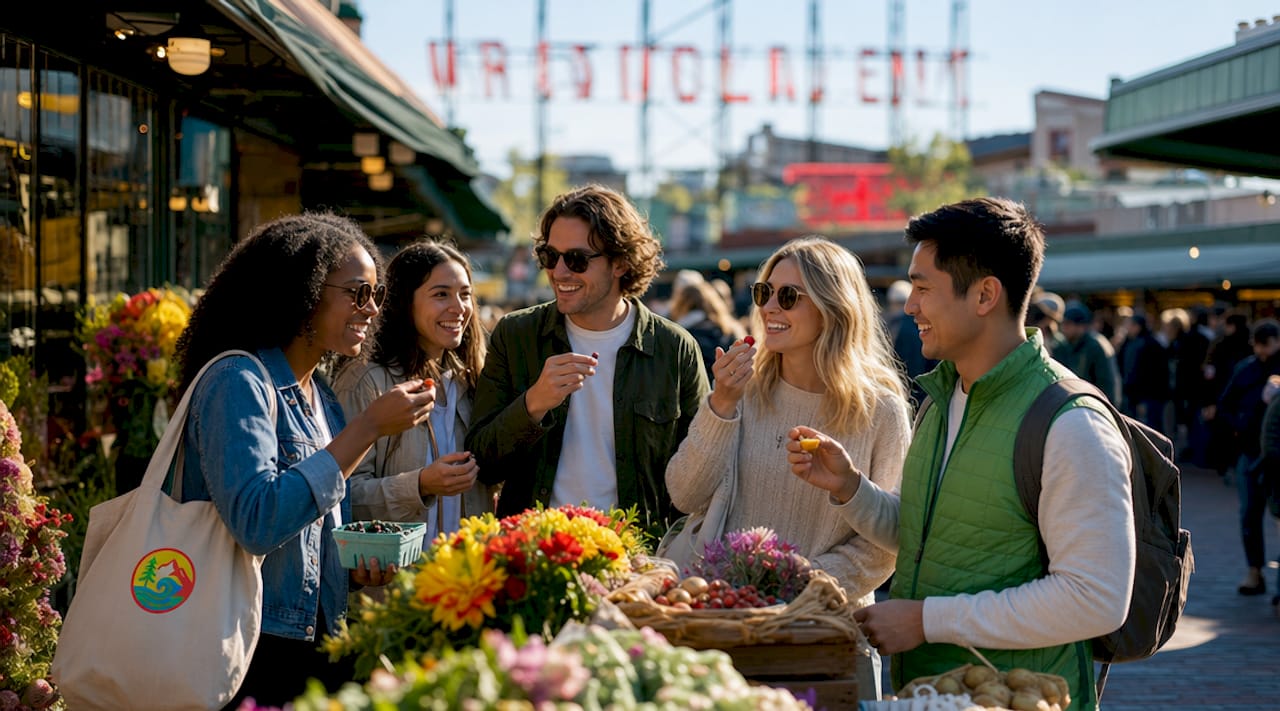
Pike Place Market is a historic public market in Seattle, Washington, founded in 1907 and recognized as one of the oldest continuously operating farmers markets in the United States. Located at 85 Pike St. overlooking Elliott Bay, it draws millions of visitors each year while serving as a genuine neighborhood hub for local residents. In 2023, the market recorded 20.9 million total visitors and generated $177 million in commercial sales. That number tells you this is not a sleepy heritage site. It is a thriving, working marketplace where fresh seafood, handmade crafts, independent restaurants, and decades of Seattle culture exist side by side.
What is Pike Place Market and how did it begin?
Pike Place Market was founded on August 17, 1907, with a straightforward purpose: connect farmers directly with Seattle consumers and cut out the middlemen who were inflating food prices. On opening day, eight farmers showed up. By the end of the week, crowds were so large that the city had to manage traffic on Pike Street. That immediate public response set the tone for everything the market would become.
The market grew steadily through the early twentieth century, becoming a center for Seattle’s immigrant communities, particularly Japanese American farmers who made up a significant portion of vendors before World War II. Their forced removal during the war left a visible gap in the market’s culture, one that took years to recover from. This history is part of why the market is considered a living record of Seattle’s social story, not just a place to buy produce.
By the 1960s, urban renewal plans threatened to demolish the market entirely and replace it with hotels and parking structures. What happened next is one of Seattle’s defining civic moments:
- Architect Victor Steinbrueck and a coalition of residents formed Friends of the Market in 1964.
- The group spent seven years organizing community opposition to demolition plans.
- In 1971, Seattle voters approved a ballot measure to preserve the market by a 3-to-2 margin.
- A seven-acre historic district was established, legally protecting the market from future redevelopment.
- Restoration work through the 1970s and 1980s brought the buildings back to their original character.
“The fight to save Pike Place Market was really a fight to define what kind of city Seattle wanted to be.” This sentiment, echoed by preservationists and historians alike, explains why the market carries so much emotional weight for longtime Seattle residents.
Why Pike Place Market matters to Seattle’s culture
Pike Place Market functions as far more than a tourist attraction. It is a functioning neighborhood hub that balances the needs of local residents with the curiosity of millions of visitors each year. That balance is intentional and carefully maintained.
The market’s social infrastructure is genuinely unusual for a commercial space. It provides:
- Affordable housing for over 450 low-income residents in apartments located within the market district
- A food bank serving thousands of Seattle residents each month
- A preschool for children of market workers and neighborhood families
- Senior centers and social service offices embedded within the market’s buildings
- Medical and dental clinics accessible to residents and low-income community members
This means that when you walk through Pike Place Market, you are moving through a space where someone’s grandmother lives upstairs, where a child attends school two floors above the fish stalls, and where a family is picking up groceries at the food bank around the corner. That layered reality is what separates it from any other market you have visited.
The role of Pike Place Market in Seattle culture also includes its function as a small business incubator. Strict rules prohibit franchise locations inside the market, which means every vendor you encounter is an independent operator. This policy has protected the market’s character for decades and given generations of entrepreneurs their first foothold in Seattle’s economy.
Pro Tip: Ask any vendor where their product comes from. The market’s rules require producers to sell what they actually make or grow, so you will almost always get a direct, personal answer that reveals something unexpected about the food or craft in front of you.
What are the main Pike Place Market attractions and food offerings?
The market’s multiple levels and districts host an extraordinary range of experiences, from the famous flying fish at Pike Place Fish Market to flower stalls selling locally grown blooms at prices that would surprise most visitors. Over 200 artisan craft vendors sell handmade goods ranging from jewelry and ceramics to woodwork and photography.
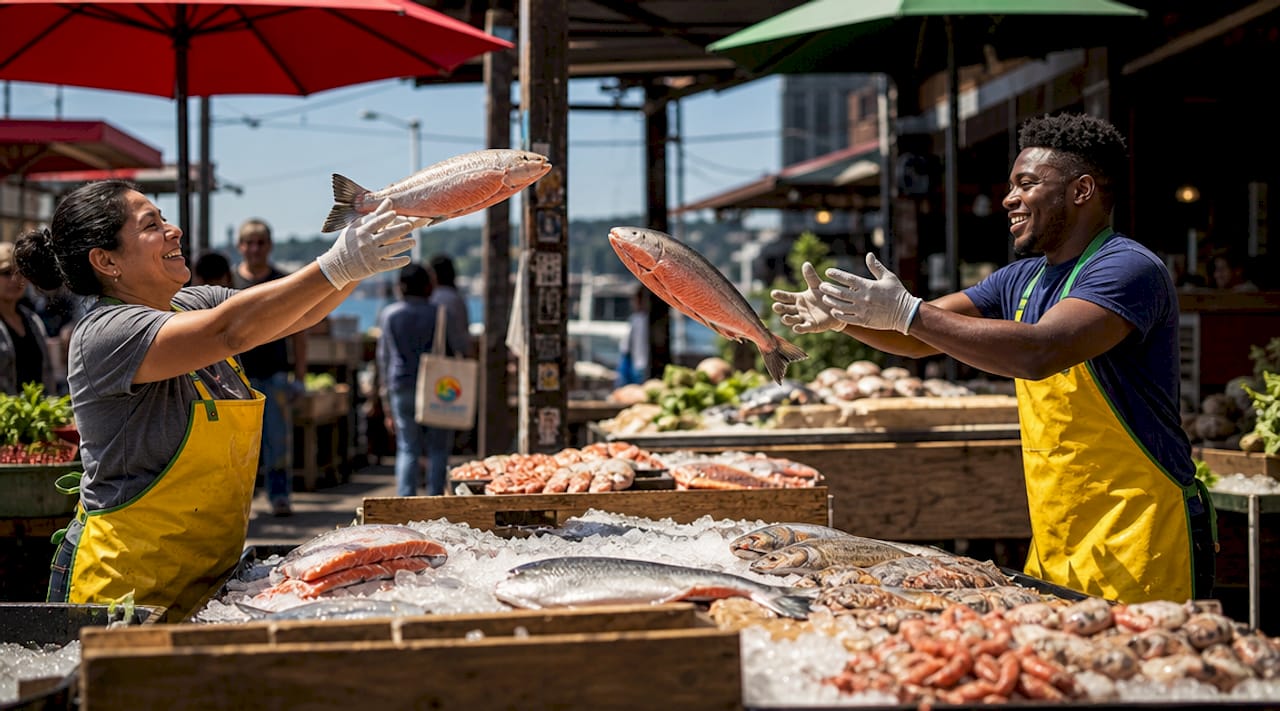
The food offerings alone justify a full morning of exploration. Here is a comparison of the market’s most distinctive food categories:
| Category | What to expect |
|---|---|
| Fresh seafood | Live Dungeness crab, wild salmon, and the famous fish-throwing fishmongers at Pike Place Fish Market |
| Artisan cheese | Beecher’s Handmade Cheese, which started here and produces its flagship Flagship cheddar on-site |
| Specialty produce | Locally grown seasonal vegetables, mushrooms, and herbs from Washington State farms |
| International cuisine | Vietnamese, Greek, Mexican, and Ethiopian restaurants operating within the market’s lower levels |
| Baked goods | Fresh piroshky from Piroshky Piroshky, a Russian bakery that has operated at the market for decades |
Starbucks and Beecher’s Handmade Cheese both trace their origins to Pike Place Market, though Starbucks has long since grown into a global corporation. The original Starbucks location at 1912 Pike Place still operates and draws long lines of visitors who want to see where the brand began. Beecher’s, by contrast, remains a local institution with its cheesemaking process visible through a glass window at street level.
Beyond food, the market’s lower levels contain antique shops, booksellers, comic book stores, and specialty retailers that most visitors never discover. The “Down Under” section, accessible by stairs from the main arcade, holds some of the market’s most interesting and least crowded shops.
How to plan your visit to Pike Place Market
Pike Place Market operates 363 days per year, closing only on Thanksgiving and Christmas. That reliability makes it one of the most accessible major attractions in Seattle, regardless of when you arrive. Most vendors open between 9:00 a.m. and 10:00 a.m. and close by 6:00 p.m., with some restaurants staying open into the evening.
Follow these steps to get the most out of your visit:
- Arrive before 10:00 a.m. The main arcade is significantly less crowded in the first hour, giving you space to browse the flower stalls and fish counters without shoulder-to-shoulder crowds.
- Start at the main entrance on Pike Street and walk the full length of the main arcade before doubling back to explore. This gives you a mental map of the layout before you commit to any one vendor.
- Take the stairs down to the lower levels. The “Down Under” shops and the Economy Market building contain antiques, specialty food, and local art that most visitors skip entirely.
- Budget at least two to three hours. A quick pass through the main floor takes thirty minutes. A genuine exploration of all levels, including lunch at one of the market’s restaurants, takes a full half-day.
- Use the Red Garage for parking if you drive. It is the closest parking structure to the market’s main entrance and connects directly to the building.
Getting to the market by public transit is straightforward. Seattle’s King County Metro buses stop within a block of the main entrance, and the Seattle Center Monorail combined with a short walk from Westlake Center is another option for visitors staying near downtown hotels.
Pro Tip: Engaging directly with producers and craftspeople is the single best way to get more out of your visit. Ask a farmer about their growing methods, ask a jeweler about their materials, or ask a fishmonger to recommend a preparation technique. These conversations are what make Pike Place Market genuinely different from any other shopping experience.
Key takeaways
Pike Place Market is Seattle’s most historically significant public space, combining a working farmers market, independent small businesses, and genuine community services in a single protected historic district.
| Point | Details |
|---|---|
| Founded in 1907 | One of the oldest continuously operating public markets in the U.S., drawing nearly 21 million visitors in 2023. |
| Preserved by voters | Seattle residents voted in 1971 to protect the market from demolition, creating a seven-acre historic district. |
| More than a market | The market provides affordable housing, a food bank, a preschool, and social services for over 450 residents. |
| No franchises allowed | Strict rules keep every vendor independent, protecting the market’s local character and authenticity. |
| Open nearly every day | The market operates 363 days per year, making it accessible for almost any travel itinerary. |
Why Pike Place Market surprised even me
I have spent years helping visitors experience Seattle, and Pike Place Market still catches people off guard in the best way. Most travelers arrive expecting a photogenic fish-throwing show and leave having discovered something much richer. The market reflects Seattle’s immigrant history in ways that are visible if you know where to look: in the names above the stalls, in the foods being prepared, and in the stories vendors share when you ask.
What I find most underappreciated is the market’s lower levels. The main arcade gets all the attention, but the floors below contain decades of accumulated Seattle character in the form of antique dealers, independent booksellers, and specialty shops that have operated in the same spot for thirty or forty years. These are the spaces that make the market feel less like a curated experience and more like a real place.
The other thing most visitors miss is the view. The market sits directly above Elliott Bay, and several of the market’s restaurants and outdoor areas offer unobstructed views of the water and the Olympic Mountains. Arriving early on a clear morning and watching the city wake up from that vantage point is one of Seattle’s genuinely great experiences.
My honest recommendation: do not treat Pike Place Market as a checkbox on a Seattle itinerary. Treat it as the starting point for understanding what Seattle actually is.
— WCTP_Systems
Explore Seattle with West Coast Tour Partners

West Coast Tour Partners brings Pike Place Market to life through The Market Experience, an immersive guided tour that goes well beyond the main arcade. Guests discover hidden history, sample local food and drink, take on interactive challenges, and hear the stories behind the vendors and buildings that most visitors walk past without a second glance. Whether you are arriving on a cruise ship, spending a weekend in Seattle, or looking for a genuinely memorable way to explore the city, West Coast Tour Partners offers Seattle tours and experiences designed to make every visit feel personal and unforgettable. Book your Market Experience today and see Pike Place Market the way locals know it.
FAQ
When is Pike Place Market open?
Pike Place Market is open 363 days per year, closing only on Thanksgiving and Christmas. Most vendors operate from approximately 9:00 a.m. to 6:00 p.m.
Where exactly is Pike Place Market located?
The market is located at 85 Pike St. in downtown Seattle, overlooking Elliott Bay, within easy walking distance of the waterfront and Seattle’s central business district.
Why are there no chain restaurants inside Pike Place Market?
The market enforces strict rules that prohibit franchise locations to preserve its independent, local character. Every vendor inside the market is an independent business owner.
Did Starbucks really start at Pike Place Market?
Yes. The original Starbucks opened at Pike Place Market in 1971 and still operates at 1912 Pike Place. Beecher’s Handmade Cheese also started at the market and continues to make cheese on-site today.
How much time should I spend at Pike Place Market?
Plan for at least two to three hours to explore the main arcade, lower levels, and surrounding streets. A full half-day gives you time for a meal and genuine conversations with vendors, which is where the real experience happens.
Leave a Reply