
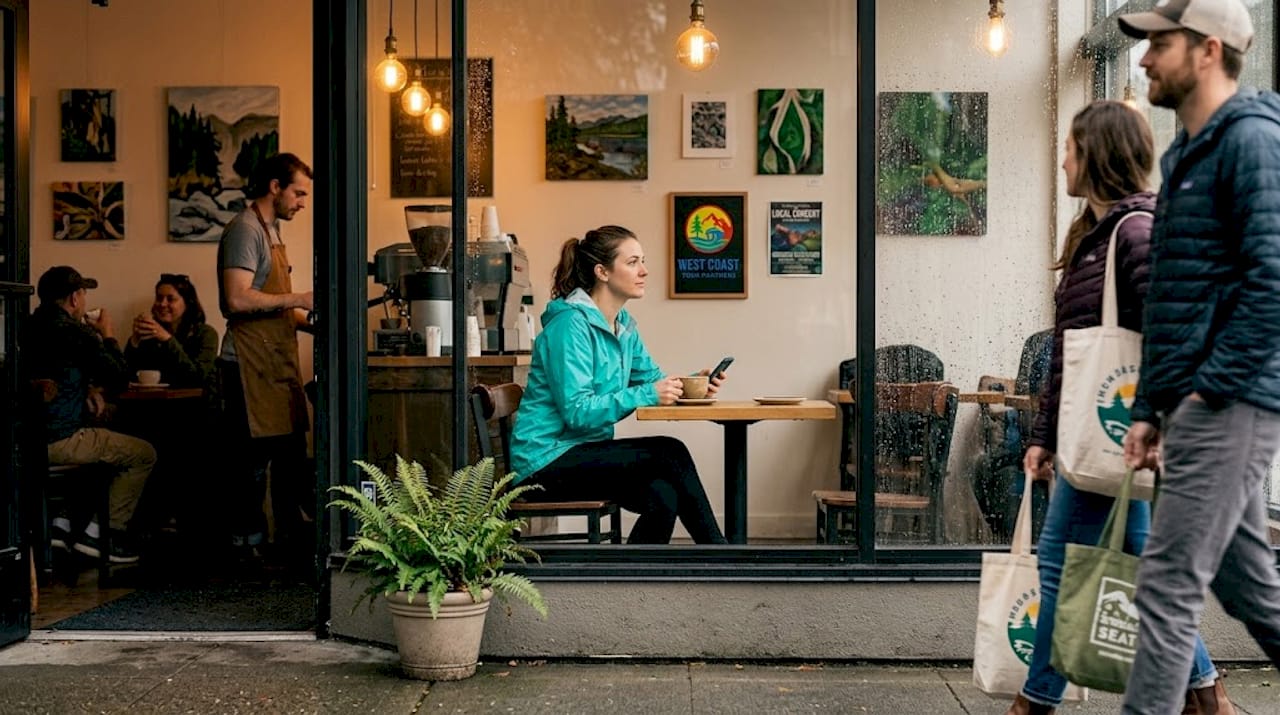
Seattle rewards patience. Most visitors spend two days photographing the Space Needle and eating clam chowder from a sourdough bowl, and then they leave thinking they’ve seen the city. They haven’t. To truly experience Seattle like a local, you need to slow down, pick a neighborhood, and let the city show you what it actually feels like to live here. This guide gives you the mindset, the steps, and the specific moves that turn a standard tourist trip into something you’ll actually remember.
Table of Contents
- Key takeaways
- How to experience Seattle like a local: what to prepare first
- Step-by-step guide to exploring Seattle authentically
- Common mistakes that kill the authentic experience
- How to deepen and verify your local experience
- My honest take on what separates a real Seattle visit from a great one
- Explore Seattle with a local guide from West Coast Tour Partners
- FAQ
Key takeaways
| Point | Details |
|---|---|
| Neighborhood choice matters | Staying in Ballard or Capitol Hill puts you closer to authentic local culture than the downtown core. |
| Ditch the umbrella | Locals wear hooded rain jackets; arriving with one signals you’ve done your research. |
| Go early to Pike Place | Arriving before 10 a.m. gives you the real market experience before crowds take over. |
| Ferry rides are rituals | Taking a Washington State Ferry is not just transit; it’s one of Seattle’s most sensory local experiences. |
| Slow down intentionally | Wandering without a checklist, sitting in a park, and observing everyday life is how locals actually spend their city time. |
How to experience Seattle like a local: what to prepare first
Before you arrive, the most important shift is mental. Experiencing Seattle authentically is less about seeing a list of attractions and more about matching the pace and sensory rhythm of the city. Locals here observe. They sit with their coffee for a long time. They walk slowly through markets and parks without staring at their phones.
Here’s what to get right before you even land:
- Pack a quality hooded rain jacket, not an umbrella. This is the single biggest giveaway that separates tourists from locals. Locals avoid umbrellas entirely, preferring a waterproof jacket that keeps their hands free and their pace uninterrupted. Seattle’s rain is often more mist than downpour, and an umbrella in this city is almost a liability on the narrow sidewalks around Pike Place Market.
- Choose where you stay very deliberately. The downtown core is convenient, but it’s not where Seattle actually lives. Ballard and Capitol Hill have the highest concentration of independent coffee shops, neighborhood breweries, weekend markets, and walkable residential streets. If your hotel is in one of these neighborhoods, you’ll absorb local culture without even trying.
- Build unstructured time into every day. This is the hardest ask for travelers who’ve planned every hour, but it’s the most important. Leave at least two hours each day with no plan at all.
- Learn the ferry system basics. Ferry rides as cultural rituals are something locals take for granted but visitors rarely think to do. A Washington State Ferry crossing from downtown to Bainbridge Island costs under $10 one way and delivers views of the Olympic Mountains, Puget Sound, and the Seattle skyline that no observation deck can match.
- Embrace the outdoors as infrastructure. Seattleites treat parks and trails as part of daily life, not weekend events. Trail running, paddleboarding, and waterfront walking are woven into ordinary weekdays here.
Pro Tip: Download the King County Metro Transit app before your trip. Locals use buses and ferries together, and understanding how they connect gives you access to neighborhoods that most tourists never reach by rideshare.
Step-by-step guide to exploring Seattle authentically
This is where preparation turns into lived experience. Follow these steps over two to three days and you’ll come away with a genuinely different picture of the city.
-
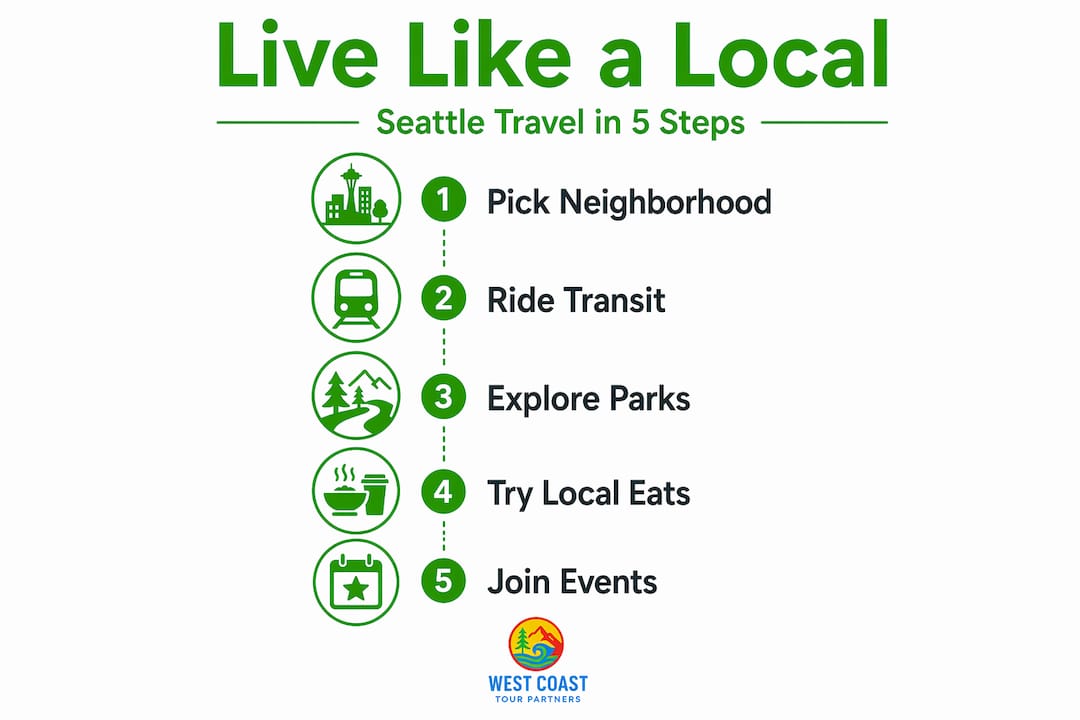
Start your first morning at Pike Place Market before 10 a.m. The best time to visit Pike Place is early, when vendors are setting up, the fish are still glistening on ice, and the market feels like a working food ecosystem rather than a photo backdrop. Buy something from a stall, talk to a vendor, and walk the lower levels where the “down under” shops sit. Most visitors never go below the main arcade.
-
Spend at least half a day in one neighborhood on foot. Pick Ballard for its Scandinavian heritage and fishing dock feel, or Capitol Hill for its music venues, bookshops, and independent restaurants. Each Seattle neighborhood has a genuinely distinct culture that downtown simply doesn’t represent. Walk without a destination. Look at the architecture, the window displays, and the people sitting at sidewalk tables.
-
Find an independent coffee shop and stay longer than you think you should. Seattle’s coffee culture is not about speed. Locals sit. They read. They have second cups. Avoid the chains and look for roasters with single-origin offerings and mismatched furniture. This is where you’ll overhear real Seattle conversations.
-
Take an afternoon ferry to Bainbridge Island. Board at the downtown Seattle Ferry Terminal, grab a seat on the outdoor deck regardless of the temperature, and watch the city skyline recede behind you. Walk around Winslow on the Bainbridge side for an hour, then ride back. The round trip takes about 90 minutes total and costs very little. It’s one of the most viscerally local things you can do.
-
Visit Kerry Park instead of the Space Needle observation deck. Locals prefer Kerry Park for the city’s most iconic view. It’s a small park on Queen Anne Hill that gives you the full skyline, the Space Needle in frame, and Mount Rainier on clear days. It’s free, quiet, and the kind of place where you’ll see locals having picnics rather than tourist groups waiting in line.
-
Eat seasonally and locally. Seattle’s food scene genuinely follows the calendar. Salmon dominates summer menus, Dungeness crab arrives in winter, and foraged mushrooms show up in fall across Capitol Hill restaurant menus. Order what’s in season and you’ll eat the way residents actually eat.
-
Catch live music in a neighborhood bar. Capitol Hill and Ballard live music venues offer small, intimate shows most nights of the week. Skip the large venues downtown and look for a venue with under 200 seats. The energy is completely different, and you’re likely to end up talking to locals who come here regularly.
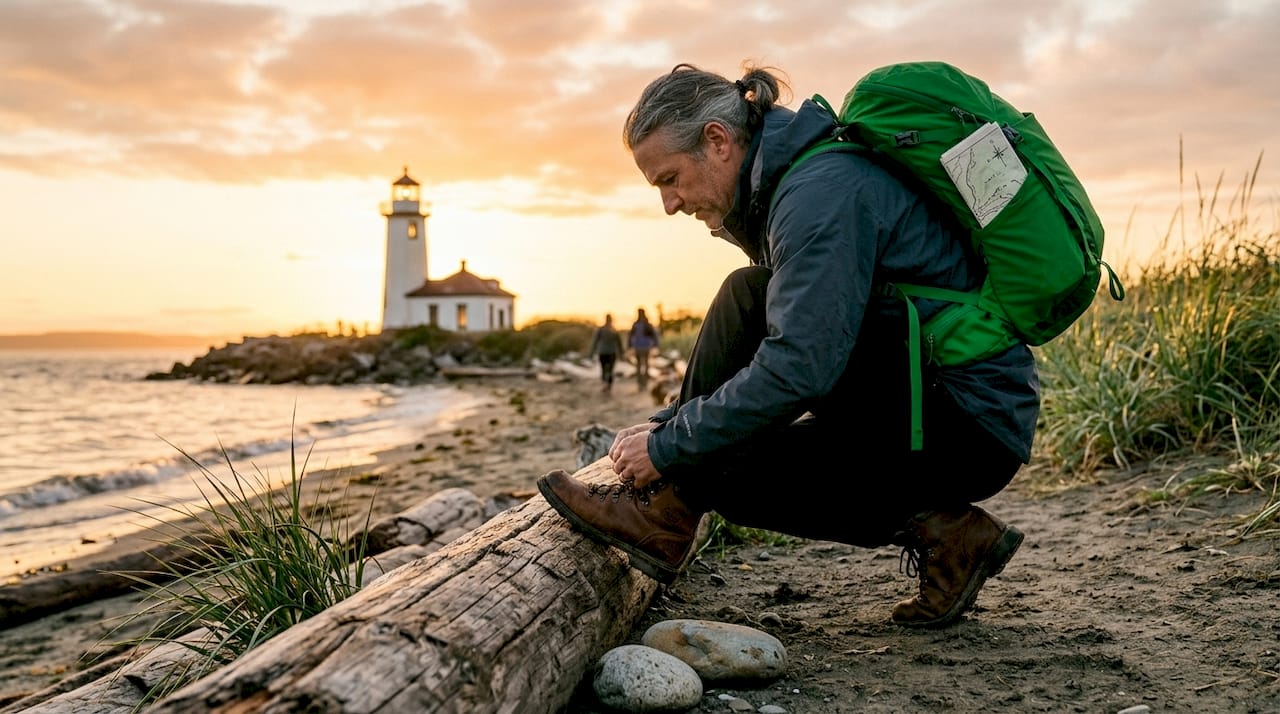
Pro Tip: Discovery Park on the northwest edge of the city has 534 acres of trails, bluff views, and a working lighthouse. It’s where Seattle residents go to decompress, and on a weekday morning, you’ll feel more like a neighbor than a tourist.
Common mistakes that kill the authentic experience
Even well-intentioned travelers fall into patterns that keep them firmly in tourist territory. Recognizing these traps in advance will save you real time and disappointment.
- Spending most of your time on the waterfront and downtown corridor. These areas are beautiful, but they’re designed for visitors. The real city is in the neighborhoods.
- Using an umbrella in light rain. Beyond being impractical on crowded sidewalks, Seattle residents skip umbrellas as a matter of practical habit. A good jacket keeps you more mobile and signals that you understand the climate.
- Visiting Pike Place Market at noon on a Saturday. The market is genuinely worth your time, but not at peak hours. Mid-day weekends turn it into a crowd management exercise rather than a food experience.
- Rushing through neighborhoods to hit multiple areas in one day. Seattle’s neighborhoods reward depth, not breadth. One afternoon spent sitting in a Ballard brewery garden gives you more cultural texture than four neighborhoods seen from a rideshare window.
- Treating viewpoints as photo stops rather than places to pause. Kerry Park, Gas Works Park, and Alki Beach in West Seattle all offer views that locals sit with for an hour. Treating them as photo ops and leaving misses the point entirely.
“The difference between a tourist visit and a local experience in Seattle often comes down to one thing: how long you’re willing to sit still.” A park bench at Kerry Park or a window seat at a neighborhood coffee shop teaches you more about this city than any landmark.
How to deepen and verify your local experience
Once you’re in the city and moving through it, these habits help you stay anchored in authenticity rather than drifting back into tourist mode:
- Ask for recommendations from people who live nearby. Staff at neighborhood coffee shops, bookstores, and small restaurants are reliable sources. Avoid asking hotel concierges for “hidden gems in Seattle” — their job is to recommend established attractions, not residential favorites.
- Use a bike share for at least one afternoon. Seattle’s Lime bike network is genuinely used by residents for short neighborhood trips. Riding through Fremont or along the Burke-Gilman Trail puts you on the same infrastructure locals use daily.
- Observe before you engage. Watch how people interact at the Pike Place Market fish stall before you jump in. Notice how quietly Seattleites tend to move through their neighborhoods. The culture here is observant and slightly reserved at first, and matching that energy helps you feel the texture of daily life.
- Attend a neighborhood event if the timing aligns. Ballard’s Farmers Market runs Sunday mornings year-round. Fremont’s Sunday Market runs spring through fall. These are not tourist events; they’re where residents actually shop.
- Capture moments intentionally, not compulsively. Urban-nature integration in Seattle means there are genuinely beautiful scenes everywhere, from herons on the waterfront to flowering trees along residential streets. Putting your phone down for stretches and simply absorbing what’s around you will leave a stronger impression than a camera roll full of quick shots.
Puget Sound’s water temperatures range between 45ºF and 60ºF year-round, which means waterfront activities like kayaking and paddleboarding are done by locals with cold-water gear, not beachwear. Renting a kayak from the Lake Union area gives you a fully local water experience that connects the city’s inland lakes to its maritime character.
My honest take on what separates a real Seattle visit from a great one
I’ve spent a lot of time thinking about what actually makes a visit to Seattle resonate. And the honest answer is uncomfortable for trip planners: it’s not the sights. It’s the pace.
Every time I see someone try to cover Pike Place Market, the Space Needle, Capitol Hill, Ballard, and a ferry in a single day, I know they’re going to leave feeling like they “did Seattle” while actually having skimmed the surface of it. The city doesn’t reveal itself to speed.
What I’ve found is that the most meaningful Seattle experiences tend to be unremarkable on paper. A long coffee at a table by the window in a Fremont roaster. A quiet Tuesday evening at a small Capitol Hill venue with 40 people watching a band nobody outside Seattle has heard of. Sitting at Kerry Park at dusk watching the light change behind the Olympics while Mount Rainier slowly goes pink. None of these are on a top-ten list. All of them are exactly what living in this city feels like.
The rain is also worth addressing directly. Most visitors tolerate it. Locals genuinely don’t mind it. The reason isn’t psychological resilience. It’s that the rain here is usually light, consistent, and weirdly beautiful when you’re walking through a tree-lined neighborhood with a good jacket on. When you stop fighting Seattle’s weather and start walking in it the way residents do, something shifts in how the city feels.
My advice: plan less than you think you need to. Leave gaps. Let yourself get a little lost in Ballard or Capitol Hill. The city will meet you there.
— WCTP_Systems
Explore Seattle with a local guide from West Coast Tour Partners
Self-guided wandering gets you a long way in Seattle. But there are layers of this city, especially in places like Pike Place Market, that you simply won’t discover on your own without the right person pointing them out.

West Coast Tour Partners was built specifically for visitors who want something more than a standard sightseeing loop. Their experiences include immersive Pike Place Market tours featuring hidden history, local food tastings, storytelling, and hands-on challenges that reveal the market the way vendors and longtime locals actually experience it. The Let’s Go Seattle! shuttle turns transit into a guided city introduction with humor, music, and local context baked in. ScooTours offer a playful, social way to cover Seattle’s waterfront and neighborhoods at a pace that actually lets you absorb what you’re seeing. These aren’t narrated bus tours. They’re experiences designed to make you feel like you belong here.
FAQ
What are the best neighborhoods for a local Seattle experience?
Ballard, Capitol Hill, Fremont, and Alki Beach offer the most authentic neighborhood culture. These areas have independent restaurants, coffee roasters, and weekend markets where residents actually spend their time.
When is the best time to visit Pike Place Market?
Arriving before 10 a.m. is the clearest advantage you can give yourself. Early morning visits let you see genuine vendor activity, avoid crowds, and interact with market sellers rather than waiting in lines around them.
Do locals really not use umbrellas in Seattle?
Most Seattle residents prefer a quality hooded rain jacket over an umbrella. The rain here is frequently light and misty, and jackets offer more mobility on sidewalks and in markets where open umbrellas become obstacles.
Is the Space Needle worth visiting for first-time visitors?
The Space Needle is iconic and the views are real, but Kerry Park on Queen Anne Hill offers a comparable or better skyline view for free. Many locals never visit the Space Needle observation deck and consider Kerry Park the better experience.
How do you use ferries like a local in Seattle?
Board a Washington State Ferry at the downtown terminal for Bainbridge Island and take an outdoor deck seat. The crossing takes about 35 minutes each way, offers unmatched views, and costs a fraction of most paid attractions. It’s the closest thing to a daily local ritual that visitors can genuinely participate in.
Leave a Reply