Seattle’s cultural landmarks are defined by a rare combination of official historic designation, living Indigenous heritage, and community-driven festivals that few American cities can match. This curated best Seattle cultural landmarks list goes beyond the obvious photo stops to give you a criteria-grounded guide built on heritage, architecture, and authentic local experience. You will find Pike Place Market, Seattle Center, and Indigenous public art installations alongside lesser-known neighborhood gems that reveal the city’s true character. Whether you are arriving by cruise ship, planning a long weekend, or simply want to experience Seattle arts and culture at its most genuine, this list gives you the framework to do it right.
1. What makes Seattle’s official city landmarks worth your attention
Seattle’s City Landmarks program has designated over 400 sites since 1973, making it one of the most active municipal preservation programs in the Pacific Northwest. To qualify, a property must be at least 25 years old and meet at least one of six criteria covering historical significance, architectural merit, cultural association, or prominence within the cityscape. That formal standard is what separates a true Seattle historical site from a building that simply looks old.
Notable examples include St. James Cathedral, a Beaux-Arts structure completed in 1907, and Admiral’s House, which reflects the city’s early civic ambitions. Each designation goes through a formal nomination and approval process managed by the Landmarks Preservation Board. That process adds credibility you can rely on when building your own itinerary.
Pro Tip: Use landmark status as a practical filter when planning your visit. If a site carries an official City of Seattle designation, it has already passed a rigorous cultural and historical review, which means your time there is almost always well spent.
- Look up the Seattle Landmarks map on Seattle.gov before your trip
- Prioritize sites that combine architectural and cultural significance
- Ask local guides about the nomination stories behind specific buildings
2. Pike Place Market: a nine-acre living cultural district
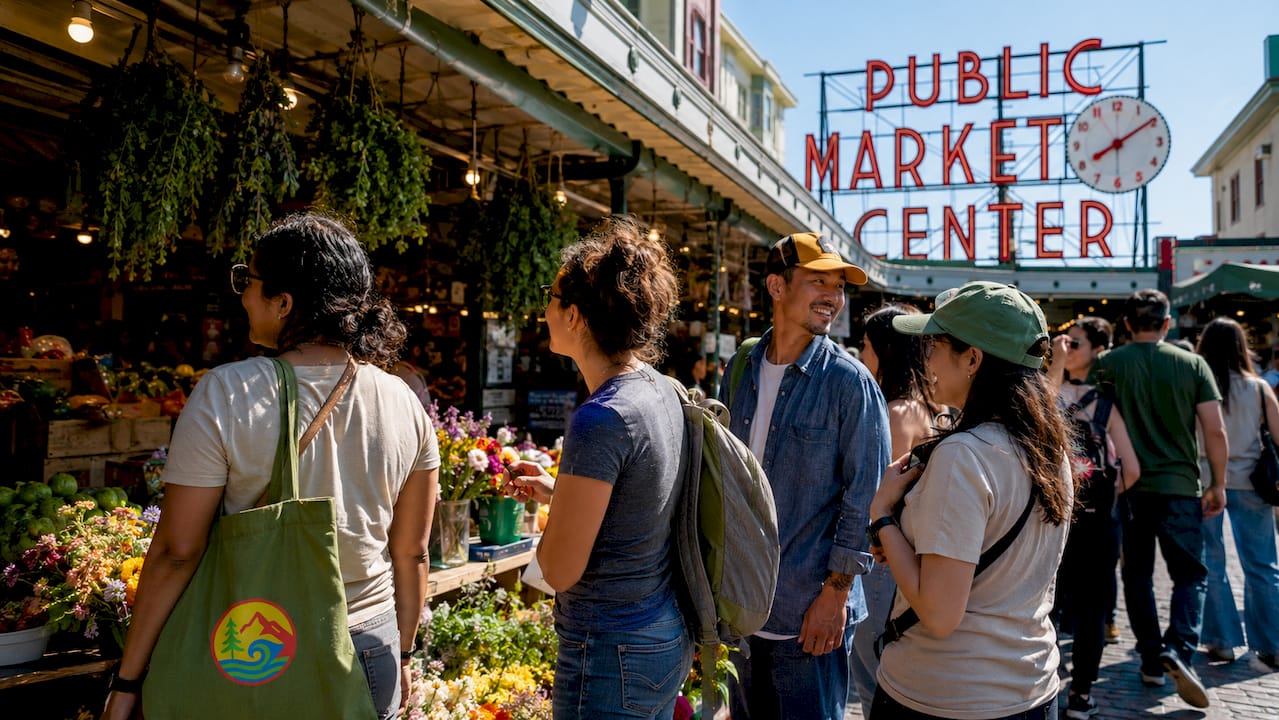
Pike Place Market is not just a farmers market. It is a nine-acre historic district featuring more than 180 craftspeople and dozens of independent local businesses, making it one of the most densely cultural spaces in downtown Seattle. The market has operated for over 100 years, and its layered mix of street performers, regional cuisine, and waterfront views of Elliott Bay creates an informal education you cannot get from any museum.
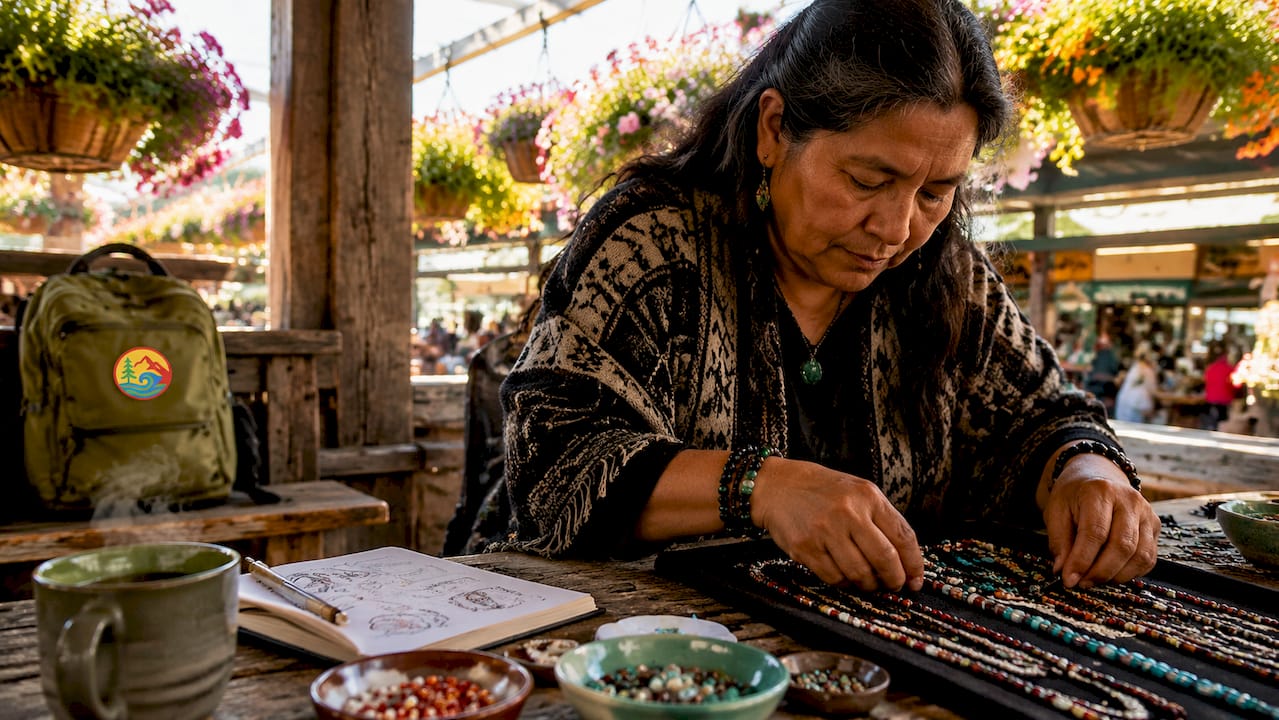
What sets Pike Place apart from other top cultural attractions in Seattle is the density of human stories packed into a compact space. You can watch a fishmonger throw a 20-pound salmon, buy handmade jewelry from a craftsperson who has held the same stall for decades, and eat a bowl of clam chowder while looking out over Puget Sound, all within a single hour. Every corner tells a story, and the market rewards slow exploration far more than a quick walk-through.
Pro Tip: Arrive before 10 a.m. on a weekday to experience the market the way locals do. The produce stalls are fully stocked, the buskers are just warming up, and the crowds have not yet arrived from the cruise terminals.
- Sample regional specialties like Dungeness crab and Pike Place Chowder
- Visit the lower levels of the market for artisan studios and hidden shops
- Watch for live music and street performance near the main entrance on Pike Street
3. Seattle Center: the city’s cultural gathering place
Seattle Center is the region’s most important civic and cultural gathering place, a designation reinforced in 2026 when Mayor Katie B. Wilson described it as a space reflecting the city’s shared imagination and community spirit. Spanning 74 acres near the base of the Space Needle, the campus holds museums, performance venues, and public green space that collectively function as Seattle’s cultural living room.
Chihuly Garden and Glass sits at the heart of the campus and operates as a hybrid gallery and live demo cultural site. The experience combines indoor galleries, a centerpiece Glasshouse with a 100-foot-long ceiling sculpture, garden installations, and live glassmaking demonstrations. Treating it as a dynamic environment rather than a static exhibit changes the experience entirely. The live demos show you how the art is made, which deepens your appreciation of the finished pieces.
Pro Tip: Check the Seattle Center events calendar before you visit. Many of the best experiences on the campus, including Festál festivals and outdoor performances, are free and run on specific weekends throughout the year.
- The Space Needle observation deck offers a 360-degree view of the city and Puget Sound
- The Museum of Pop Culture (MoPOP) covers music, science fiction, and gaming culture
- Pacific Science Center connects science and culture through interactive exhibits
4. Festál: 25 free cultural festivals that define Seattle arts and culture
Festál is Seattle Center’s community-produced festival model that runs 25 annual cultural festivals from February through November, all free to attend. Launched in 1997, the program has grown into one of the most inclusive public cultural programs in the United States. Each festival is produced by the cultural community it represents, which means the programming is authentic rather than curated from the outside.
The model works because individual festivals maintain their own unique programming while benefiting from shared city infrastructure and a built-in audience. That approach has allowed traditions to pass across generations and expanded public engagement with cultures that many visitors would never otherwise encounter. Tết in Seattle brings Vietnamese New Year celebrations to the campus with traditional food, dance, and ceremony. The Indigenous People Festival centers Coast Salish and other Pacific Northwest native traditions through storytelling, drumming, and art.
- Tết in Seattle: Vietnamese New Year celebration with food, performance, and ceremony
- Indigenous People Festival: Coast Salish traditions, drumming, and native art
- Pagdiriwang Philippine Festival: traditional dance, music, and cuisine
- Diwali: South Asian celebration with lights, music, and community gathering
- Northwest Folklife Festival: the largest free folk arts festival in the United States
5. Indigenous cultural connections along Seattle’s waterfront
Indigenous communities have deep, continuing connections to Seattle’s shorelines, and their cultural presence is woven into the waterfront, Pioneer Square, and Lake Union in ways that reward attentive visitors. Glass salmon installations at the Seattle Aquarium’s Ocean Pavilion and annual rotating Indigenous art exhibits in Pioneer Square bring native artistic traditions into public spaces where thousands of people encounter them daily. These are not historical artifacts. They are living expressions of cultures that remain active in the city today.
The Northwest Native Canoe Center, set to open at the end of 2026, will add a significant new dimension to this cultural layer. Located along Lake Union, the center will feature indoor and outdoor canoe carving spaces, a living roof planted with blue camas flowers, and programming rooted in Coast Salish canoe traditions. It represents the kind of place-based cultural education that goes far beyond what a traditional museum can offer.
- Overlook Walk at the waterfront features Indigenous-designed public art and gathering spaces
- Pioneer Square hosts rotating exhibits from native artists throughout the year
- Elliott Bay waterfront redevelopment has integrated Indigenous cultural consultation at every stage
6. Seattle’s neighborhoods: where hidden cultural landmarks live
Seattle’s must-see landmarks extend well beyond the downtown core. Neighborhoods like Queen Anne, Pioneer Square, Fremont, Ballard, Capitol Hill, and the University District each carry distinct cultural identities shaped by waves of immigration, artistic communities, and civic history. Walking trails like the Unity Loop connect many of these spots and make it possible to experience the city’s cultural geography on foot.
The contrast between well-known landmarks and neighborhood gems is worth understanding before you plan your route.
| Well-known landmark | Hidden cultural gem | Visitor experience |
|---|---|---|
| Pike Place Market | Post Alley street art corridor | Sensory-rich, walkable, free |
| Space Needle | Fremont Troll sculpture | Playful, photogenic, neighborhood-scale |
| Chihuly Garden and Glass | Ballard Locks and fish ladder | Historic, educational, free to visit |
| Museum of Pop Culture | Georgetown arts district | Local galleries, studios, authentic community feel |
| Pioneer Square totem poles | Occidental Square pergola | Architectural history, shaded public space |
The University District anchors Seattle’s intellectual and arts culture through the Henry Art Gallery at the University of Washington, which focuses on contemporary and media-based art. Capitol Hill remains the center of Seattle’s LGBTQ+ history and independent music scene, with venues and murals that document decades of cultural activism.
Key takeaways
Seattle’s best cultural landmarks combine officially designated historic sites, living Indigenous heritage, and free community festivals to create a depth of experience that rewards visitors who explore beyond the obvious.
| Point | Details |
|---|---|
| Official designation matters | Seattle’s 400-plus city landmarks meet rigorous historic and cultural criteria, making them reliable anchors for any itinerary. |
| Pike Place Market rewards slow visits | Arriving early and exploring the lower levels reveals craftspeople, hidden shops, and local stories most visitors miss. |
| Festál offers free cultural access | Twenty-five annual festivals at Seattle Center give visitors direct, authentic engagement with the city’s diverse communities. |
| Indigenous art is embedded citywide | Public installations along Elliott Bay, Pioneer Square, and Lake Union connect visitors to living native traditions. |
| Neighborhoods hold the hidden gems | Queen Anne, Fremont, Ballard, and Capitol Hill each carry distinct cultural identities that complement the main attractions. |
Why the best Seattle cultural experiences are the ones you slow down for
Most visitors to Seattle spend their time checking off the obvious list: Space Needle, Pike Place Market, a ferry ride. Those are genuinely worth your time. But the cultural depth of this city only reveals itself when you stop treating it like a checklist and start treating it like a conversation.
What I have found, after years of working with visitors exploring Seattle’s cultural and historical sites, is that the people who leave with the strongest impressions are almost never the ones who covered the most ground. They are the ones who spent an extra hour at Pike Place talking to a craftsperson, or who stumbled into a Festál festival they had not planned for, or who stood in front of an Indigenous public art installation long enough to actually read the story behind it.
The official landmark designation system is genuinely useful as a starting filter, but it should not be your ceiling. Some of the most culturally significant experiences in Seattle happen in spaces that are too new or too community-specific to carry a formal designation yet. The Northwest Native Canoe Center opening in late 2026 is a perfect example. It will not have decades of designation history, but it will offer a quality of cultural education that very few places in the country can match.
My honest advice: build your itinerary around two or three anchor landmarks, then leave deliberate gaps for the unexpected. Seattle rewards curiosity more than it rewards efficiency.
— WCTP_Systems
Experience Seattle’s cultural landmarks with West Coast Tour Partners
Seattle’s cultural depth is best experienced with a knowledgeable guide who knows where the stories are buried. West Coast Tour Partners specializes in turning Seattle’s iconic sites and hidden historical landmarks into immersive, story-driven adventures designed for curious travelers.
The Market Experience takes you deep into Pike Place Market with guided storytelling, local food tastings, and hidden-history discoveries that most visitors walk right past. The Let’s Go Seattle! Shuttle connects cruise terminals, waterfront attractions, and cultural neighborhoods with entertainment-style hosting built into every ride. For groups, families, and first-time visitors, West Coast Tour Partners offers a connected platform of experiences that transforms a standard sightseeing day into something genuinely memorable. Book your Seattle cultural experience today and see the city the way locals know it.
FAQ
What are the top cultural landmarks in Seattle?
Pike Place Market, Seattle Center, Chihuly Garden and Glass, and the Indigenous public art installations along Elliott Bay waterfront rank among the most culturally significant sites in the city. Seattle’s City Landmarks program has also designated over 400 officially recognized historic and cultural sites worth exploring.
When is the best time to visit Seattle’s cultural festivals?
Seattle Center’s Festál program runs 25 free community-produced cultural festivals from February through November, so there is almost always an event on the calendar. Summer months offer the highest concentration of outdoor festivals, including the Northwest Folklife Festival and the Indigenous People Festival.
Are Seattle’s cultural landmarks accessible for first-time visitors?
Most of Seattle’s top cultural attractions, including Pike Place Market, Seattle Center, and the waterfront Indigenous art installations, are free or low-cost and accessible on foot or by public transit. The Unity Loop walking trail connects several neighborhood cultural sites and requires no special planning.
What is the significance of Indigenous culture in Seattle’s landmarks?
Indigenous communities, particularly Coast Salish peoples, have deep and continuing connections to Seattle’s shorelines and neighborhoods. Their cultural presence is visible in public art along Elliott Bay, rotating exhibits in Pioneer Square, and the upcoming Northwest Native Canoe Center opening on Lake Union in late 2026.
How do I find Seattle’s officially designated city landmarks?
Seattle’s City Landmarks program maintains a searchable database and map through Seattle.gov, listing all sites designated since 1973. Each entry includes the nomination history, significance criteria, and location details to help you plan a culturally grounded visit.
Recommended
- Top 4 savorseattle.com Alternatives Providers 2026 – West Coast Tour Partners
- Top 3 eatseattletours.com Alternatives Providers 2026 – West Coast Tour Partners
- What to Know Before Visiting Seattle: 2026 Guide – West Coast Tour Partners
- Seattle Market District Tour Explained for Visitors – West Coast Tour Partners
Leave a Reply