
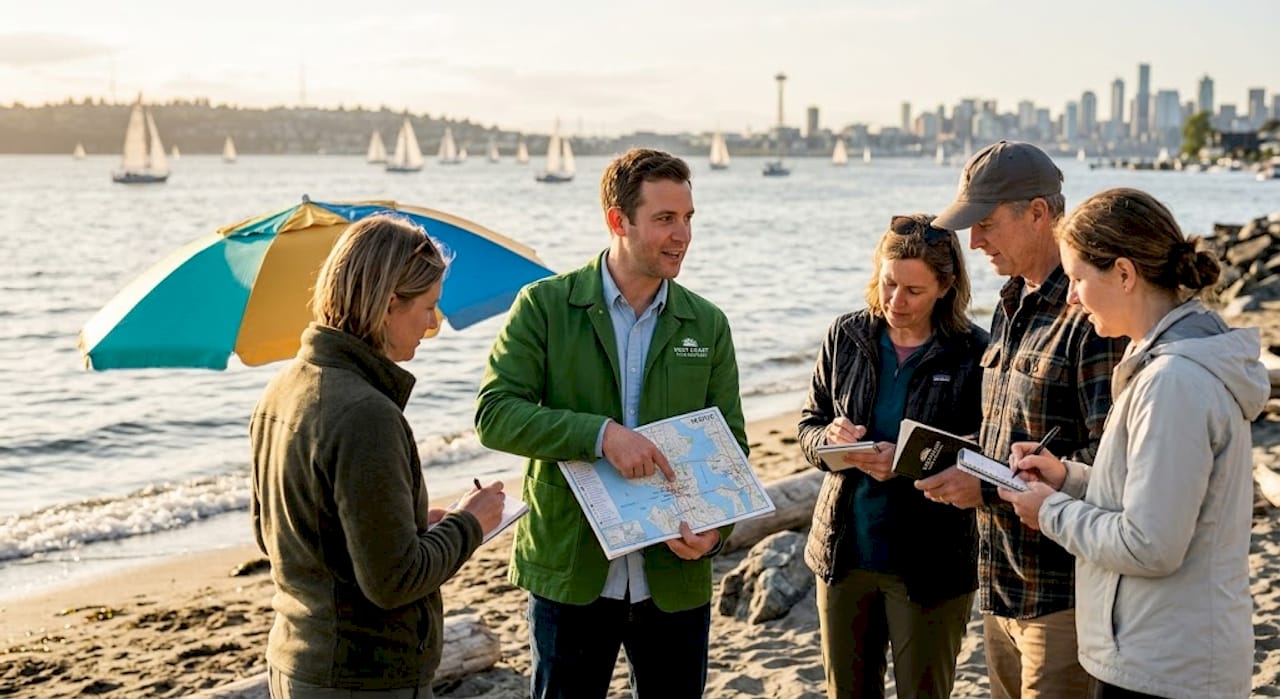
Seattle rewards the curious traveler. Beneath its coffee shops, fish markets, and waterfront views lies a city built on fire, ambition, indigenous legacy, and some genuinely wild engineering decisions. If you want seattle history facts for tourists that go beyond the Space Needle brochure, you are in the right place. This guide pulls together the stories that locals take for granted and visitors almost always miss, giving you the kind of context that transforms a good trip into an unforgettable one.
Table of Contents
- Key takeaways
- 1. Seattle history facts for tourists start here: indigenous heritage
- 2. The Great Seattle Fire and the underground city beneath your feet
- 3. The Space Needle: a cocktail napkin that changed a skyline
- 4. Seattle’s floating bridges: engineering you drive across without noticing
- 5. The Mercer Girls and Seattle’s social fabric
- 6. Pike Place Market: saved by the people who loved it
- 7. Hidden history gems locals miss
- My honest take on Seattle’s history as a visitor experience
- Discover Seattle’s stories with West Coast Tour Partners
- FAQ
Key takeaways
| Point | Details |
|---|---|
| Indigenous roots run deep | Seattle sits on Coast Salish land inhabited for over 4,000 years before European settlers arrived in 1851. |
| The city literally rose from ashes | The 1889 Great Fire destroyed 25 blocks and led to raising street levels, creating the famous Seattle Underground. |
| Engineering landmarks tell big stories | The Space Needle was sketched on a cocktail napkin and built to survive 200 mph winds and a 9.0 earthquake. |
| Hidden history rewards deeper exploration | Sites like Yesler Way and the Denny Hill regrade reveal layers of Seattle’s identity most tourists never discover. |
| Guided experiences unlock the full picture | Story-driven tours connect these facts to real places, making history feel alive rather than textbook-dry. |
1. Seattle history facts for tourists start here: indigenous heritage
Before Seattle was a city, it was home. The Coast Salish peoples, particularly the Duwamish and Suquamish tribes, lived on this land for at least 4,000 years before European settlers arrived in 1851. That is not a footnote. It is the foundation of everything you see when you walk through this city.
The city takes its name from Chief Seattle, a respected Duwamish and Suquamish leader who built early relationships with the arriving settlers. His legacy is complicated and layered, as he was both a diplomat and a man navigating an era of enormous disruption to his people. Recognizing that complexity makes your visit more honest and more meaningful.
Today, indigenous influence is visible if you know where to look. Public art installations, place names, and cultural centers carry that heritage forward. The Duwamish Longhouse and Cultural Center on the Duwamish River offers one of the most direct connections to that history available to visitors.
Pro Tip: Ask locals about the “Real Rent Duwamish” initiative. It is a voluntary program where residents contribute to the Duwamish Tribe, and learning about it gives you a richer sense of how Seattle grapples with its history in real time.
2. The Great Seattle Fire and the underground city beneath your feet
On June 6, 1889, a cabinet-maker’s glue pot boiled over in a basement shop near the waterfront. Within hours, 25 city blocks burned to the ground. The fire was catastrophic, but Seattle’s response was extraordinary.
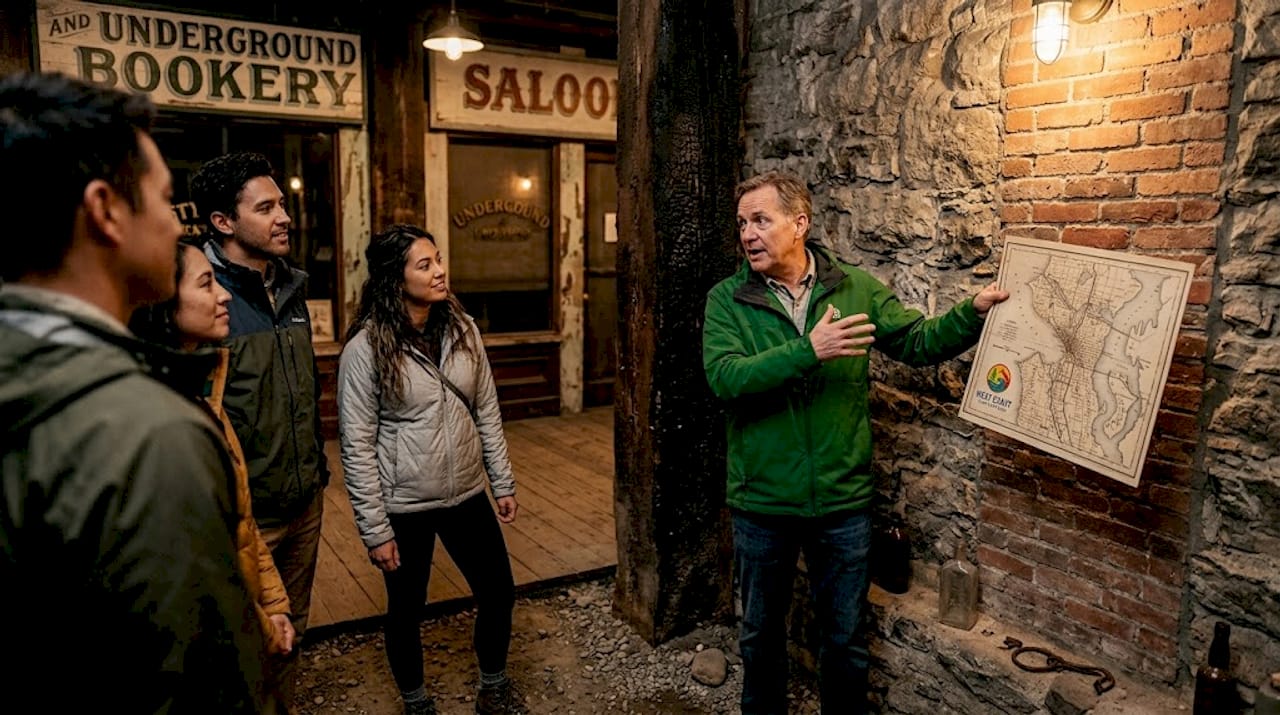
City planners seized the moment to fix a longstanding problem: the original street grade was so low that sewage routinely backed up into buildings at high tide. Rather than rebuild at the same level, they raised the streets by as much as 35 feet in some areas. Buildings were constructed at the new elevation, but the old storefronts and sidewalks remained intact below. Seattle literally built a new city on top of the old one.
Here is the detail that stops people cold: for years after the rebuild, residents climbed ladders between street levels to get from their front doors to the road. Shopkeepers would hand goods up to customers standing above them. It was a functioning, if awkward, dual-level city.
The Seattle Underground is not a metaphor. Walk the right tour and you will stand in the original 1889 storefronts, look up through the glass sidewalk blocks above you, and understand exactly how a city rebuilds itself from disaster.
If you want to experience this firsthand, underground walking tours operate regularly in the Pioneer Square neighborhood. They are one of the most genuinely surprising experiences Seattle offers, and no amount of reading quite prepares you for standing in a Victorian-era storefront 35 feet below the modern street.
3. The Space Needle: a cocktail napkin that changed a skyline
The story of the Space Needle begins with a sketch on a cocktail napkin. Edward Carlson, a hotel executive helping plan the 1962 World’s Fair, drew a rough tower concept while sitting in a Stuttgart restaurant. That sketch eventually became a 605-foot structure that was the tallest building west of the Mississippi at the time it opened.
The engineering behind it is just as impressive as the origin story. The Space Needle was built to withstand 200 mph winds and a 9.0 magnitude earthquake, which is not a small consideration in the Pacific Northwest. The foundation alone required 467 tons of concrete poured into a 30-foot-deep hole. The structure can sway up to one inch per 10 mph of wind without any structural stress.
The 1962 World’s Fair that launched the Space Needle also transformed Seattle’s identity. The fair attracted 10 million visitors and positioned Seattle as a forward-looking city at the edge of the Space Age. The Seattle Center campus you visit today is the direct legacy of that event.
| Feature | Space Needle | Lake Washington Floating Bridge |
|---|---|---|
| Year opened | 1962 | 1940 |
| Engineering highlight | Withstands 9.0 earthquakes | Uses hollow concrete pontoons |
| Record held | Tallest west of Mississippi (1962) | Longest floating bridge on earth |
| Best time to visit | Sunset for panoramic views | Drive or walk across at any time |
Pro Tip: Book the Space Needle’s glass floor observation deck for the morning. Crowds are thinner, the light is better for photos, and you get the full effect of looking straight down through the floor without waiting in line.
4. Seattle’s floating bridges: engineering you drive across without noticing
Most cities brag about their bridges. Seattle’s are genuinely strange, and that is a compliment. The Lake Washington floating bridges, including the I-90 bridge, are the longest floating bridges on earth. They do not rest on the lake bottom. They float on massive hollow concrete pontoons, anchored by cables to keep them in position.
Lake Washington is too deep and the lake bed too soft for traditional bridge supports. Engineers solved this in 1940 by designing a bridge that essentially bobs on the water’s surface. The pontoons are sealed and watertight, and the roadway sits on top of them. When storms hit and waves rise, the bridge moves with the water rather than fighting it.
Crossing one of these bridges is something you should do deliberately, not just as a transit move. Roll the window down. Feel the slight flex in the road. Look out at the water on both sides and appreciate that you are driving on something that floats.
5. The Mercer Girls and Seattle’s social fabric
In the early 1860s, Seattle had a serious demographic problem. The city was overwhelmingly male, populated by loggers, mill workers, and laborers. Asa Mercer, a young University of Washington president, had an unconventional solution.
He traveled to the East Coast twice, in 1864 and 1866, and recruited educated, unmarried women to relocate to Seattle. These women, known as the Mercer Girls, were not simply brought west as potential wives. Many were teachers, nurses, and skilled workers who contributed directly to building Seattle’s civic and cultural institutions.
The Mercer Girls helped establish schools, churches, and community organizations that gave Seattle a social structure it badly needed. Their story is one of the most human and often overlooked chapters in the city’s history.
6. Pike Place Market: saved by the people who loved it
Pike Place Market opened in 1907 and has operated continuously ever since, making it one of the oldest continuously operating farmers markets in the United States. What most tourists do not know is how close it came to being demolished.
In the late 1960s, city planners proposed tearing down the market to build a hotel, parking garage, and office complex. Local activists, led by architect Victor Steinbrueck, launched a grassroots campaign to save it. A 1971 ballot initiative established the market as a historic district, protecting it from redevelopment.
That fight matters because it defined something about Seattle’s character. The city chose living history over urban renewal profit. The market you walk through today, with its fish throwers, flower stalls, and street musicians, exists because ordinary residents decided it was worth fighting for.
- The Gum Wall, located in Pike Place’s Post Alley, has been accumulating gum since the early 1990s and now holds an estimated 2,350 pounds of chewing gum across its brick surface.
- The Fremont Troll, a massive sculpture under the Aurora Bridge, was installed in 1990 as part of a public art competition and has become one of Seattle’s most photographed landmarks.
- Seattle’s “1% for Art” ordinance requires that capital construction projects fund public art, which is why you will find striking installations throughout the city’s neighborhoods and transit stations.
7. Hidden history gems locals miss
The Denny Hill regrade
Between 1898 and 1930, Seattle undertook one of the most audacious urban engineering projects in American history. Denny Hill, a prominent ridge that blocked the city’s expansion northward, was systematically washed into Elliott Bay using high-pressure water hoses. The project moved 5.2 million cubic yards of earth and took nearly 20 years to complete. The Belltown neighborhood you walk through today sits where that hill once stood.
Yesler Way and the birth of “Skid Row”
Yesler Way holds a place in the American language that most people never connect back to Seattle. Henry Yesler built Seattle’s first steam-powered sawmill in 1853, and logs were skidded down the hill along what is now Yesler Way to reach the mill. That log-skidding road became known as the original “Skid Road.” As the area around the mill declined over time, the term migrated into American slang as “Skid Row,” now used in cities across the country to describe areas of urban poverty. Every time you hear that phrase anywhere in the world, it traces back to this street in Seattle.
The Daybreak Star Indian Cultural Center
Located inside Discovery Park, the Daybreak Star Indian Cultural Center hosts museum-quality indigenous art collections and community events that most tourists never discover. The center hosts an annual powwow and offers a genuine connection to the living cultures of Pacific Northwest tribes. It is one of the most authentic and undervisited cultural experiences in the city.
Pro Tip: Combine a visit to Discovery Park with a stop at Daybreak Star. The park offers some of Seattle’s best waterfront views, and the cultural center adds a layer of meaning that makes the whole visit more memorable.
| Hidden site | Location | What makes it special |
|---|---|---|
| Denny Hill regrade area | Belltown neighborhood | Entire hill washed into the bay; shaped modern Seattle |
| Yesler Way | Pioneer Square | Birthplace of the term “Skid Row” used worldwide |
| Daybreak Star Cultural Center | Discovery Park | Indigenous art and living cultural traditions |
My honest take on Seattle’s history as a visitor experience
I’ve spent a lot of time watching visitors move through Seattle, and the pattern is almost always the same. People hit the Space Needle, walk through Pike Place, maybe catch a waterfront view, and leave feeling like they saw the city. They did see it. But they did not feel it.
What I’ve learned is that the history is where Seattle’s real personality lives. The Great Fire story is not just a disaster narrative. It is a story about a city that looked at total destruction and said, “Fine, we will build it better.” The Mercer Girls story is not a quirky footnote. It is evidence of how communities get built by people making unconventional, courageous choices.
In my experience, the tourists who come away most moved by Seattle are the ones who learned at least one story they did not expect. The underground streets. The floating bridges. The fact that a global slang term for urban poverty was coined on a specific block you can walk down today. These details do not just add color. They change how you see everything else.
Seattle is growing fast, and rapid growth has a way of smoothing over the rough, interesting edges of a city’s past. I think that makes it more urgent, not less, to seek out these stories while the physical places that hold them are still there to visit. History in Seattle is not behind glass. It is underfoot, overhead, and around every corner if you know what you are looking for.
— WCTP_Systems
Discover Seattle’s stories with West Coast Tour Partners
Reading about Seattle’s history is one thing. Standing in the actual places where it happened, with a guide who knows the stories behind every corner, is something else entirely.

West Coast Tour Partners builds experiences designed to make Seattle’s history feel alive and personal. From immersive Pike Place Market tours that reveal the hidden stories behind the market’s preservation fight, to city explorations that connect you to Seattle’s underground, waterfront, and cultural neighborhoods, every experience is built around storytelling and genuine discovery. Whether you are arriving by cruise ship, planning a group outing, or looking for a memorable way to spend a day in the city, West Coast Tour Partners turns history into something you will actually remember.
FAQ
What is the Seattle Underground?
The Seattle Underground is a network of subterranean storefronts and sidewalks from the original 1889 city, preserved beneath Pioneer Square after streets were raised following the Great Seattle Fire. Guided tours take visitors through these spaces today.
Why is Seattle named after Chief Seattle?
The city was named in honor of Chief Seattle, a Duwamish and Suquamish leader who built diplomatic relationships with early European settlers in the 1850s. His name was anglicized from the Lushootseed “Si’ahl.”
What are Seattle’s most underrated historical sites?
The Daybreak Star Indian Cultural Center in Discovery Park, the original Yesler Way (birthplace of the term “Skid Row”), and the Belltown neighborhood (site of the Denny Hill regrade) are among the most historically significant and least visited spots in the city.
When was Pike Place Market almost demolished?
City planners proposed demolishing Pike Place Market in the late 1960s to make way for urban redevelopment. A grassroots campaign led by local activists resulted in a 1971 historic district ordinance that protected the market permanently.
How tall is the Space Needle and what can it withstand?
The Space Needle stands 605 feet tall and was engineered to survive winds of 200 mph and earthquakes up to 9.0 magnitude, reflecting the serious seismic and weather challenges of the Pacific Northwest.
Leave a Reply