
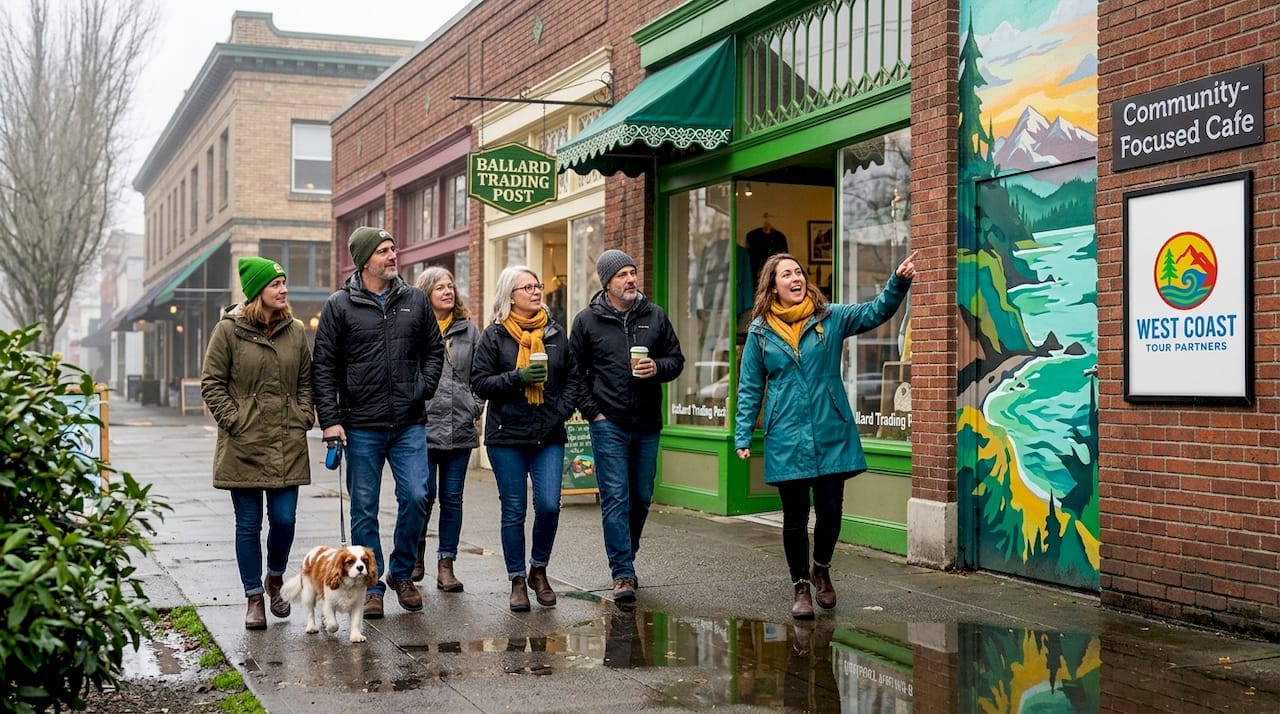
Seattle looks approachable on a map. A waterfront, a famous market, a needle poking the skyline. You think: how complicated can it be? Quite complicated, as it turns out. Understanding why first-time Seattle visitors need guides goes far deeper than getting directions. Seattle’s neighborhoods each carry a distinct personality, its terrain is genuinely hilly, and the cultural layers packed into places like Pike Place Market reward those who know where to look. A good guide doesn’t just show you the city. They hand you the keys to it.
Table of Contents
- Key Takeaways
- Why first-time Seattle visitors need guides for neighborhoods
- Practical benefits that guides deliver on the ground
- How guides turn landmarks into living stories
- Self-guided vs. guided: an honest comparison
- My take on why solo exploration falls short here
- Experience Seattle the way locals do
- FAQ
Key Takeaways
| Point | Details |
|---|---|
| Neighborhoods require local context | Seattle’s distinct areas like Ballard and Capitol Hill are easy to misread without a guide who knows their character. |
| Transit beats driving downtown | The Link Light Rail costs $3.00 and saves you parking headaches guides already know to avoid. |
| Guides add cultural depth | Guided tours layer historical and culinary storytelling that self-guided visitors rarely access on their own. |
| Timing matters more than you think | Peak season crowds and weather windows are best navigated with someone who has planned around them before. |
| Comparison favors guided for first-timers | Curated experiences consistently outperform solo exploration on depth, efficiency, and local discovery. |
Why first-time Seattle visitors need guides for neighborhoods
Seattle is not one city. It is a collection of distinct neighborhoods that feel, sound, and taste completely different from each other. Downtown gives you the waterfront energy and the Pike Place chaos. Capitol Hill pulses with music venues, LGBTQ+ culture, and some of the best coffee shops in the Pacific Northwest. Fremont leans into its quirky, artsy identity with public sculptures and weekend markets. Ballard carries a Scandinavian fishing heritage that still shows up in its architecture, breweries, and seafood spots. And the Central District holds decades of Black cultural history that most tourists walk past entirely.
Neighborhood distinctiveness is exactly what guides illuminate, enriching visitor engagement well beyond typical tourist zones. Without that context, you might spend your afternoon in Fremont thinking it’s just a cute area with a troll statue, when actually you’re standing in the middle of one of Seattle’s most intentional countercultural communities.
Here’s what guides specifically help first-timers unlock in Seattle’s neighborhoods:
- Hidden histories. Every block in Capitol Hill and the Central District carries stories about the civil rights movement, the music scene that produced Jimi Hendrix, and the waves of immigration that shaped the food culture.
- Practical routing. Neighborhoods like First Hill and Beacon Hill are physically separated by elevation changes that catch visitors off guard. A guide plans around this.
- Authentic food stops. The places locals actually eat are rarely on the first page of search results. Guides take you to the Vietnamese pho spot in the International District that’s been open since 1980, not the tourist-facing restaurant next to it.
- Timing by neighborhood. Pike Place Market is best before 10 a.m. Fremont’s Sunday Market runs only on weekends. Ballard’s waterfront locks are worth seeing when a boat is actually passing through. Guides know when to go where.
Pro Tip: Ask your guide specifically about the neighborhood they grew up in or know best. The most memorable stories are always personal ones, not scripted ones.
Guides also serve as cultural mediators who create authentic connections between travelers and locals, something no app or travel blog can fully replicate. That human element changes the experience from observation to participation.
Practical benefits that guides deliver on the ground
Seattle’s terrain surprises almost every first-time visitor. The city is built on hills, and not gentle ones. Downtown’s hilly topography challenges walkers, and guides optimize routes to minimize physical strain while maximizing what you see. That’s not a small thing when you’re carrying a bag and trying to cover ground in limited time.
Transportation is the other major variable. Here’s how guides help you handle it:
- Skip the rental car entirely. Renting a car downtown is costly and inconvenient. Parking garages near Pike Place can run $30 to $50 per day, and traffic during peak hours makes driving genuinely frustrating. Guides build itineraries around walking and transit from the start.
- Use the Link Light Rail like a local. The Link Light Rail costs $3.00 one-way and gets you from Sea-Tac Airport to downtown in about 40 minutes. Guides know which stations drop you closest to your next stop and how to load an ORCA card before you even land.
- Factor in the ferries. A Washington State Ferry to Bainbridge Island is one of the most scenic 35-minute rides in the country, and it costs less than $10. Most first-timers don’t know it doubles as a sightseeing experience with views of the Olympic Mountains. Guides build it in.
- Understand transit fare ranges. A typical one-way fare runs between $2.25 and $3.00, which means a full day of transit costs less than a single downtown parking hour. Guides help you use this system confidently.
- Plan around peak season. Seattle’s peak tourist season runs late June through early September, with temperatures in the 70s and 80s but significantly higher hotel rates and crowded landmarks. Guides know which attractions to hit early and which to skip on weekends entirely.
Pro Tip: If you’re visiting outside peak season, don’t let Seattle’s reputation for rain deter you. Rain is often misty and manageable with a light waterproof layer. Guides know this and plan accordingly.
The efficiency gains alone justify working with a guide. You need at least three days to see Seattle’s essential sights without rushing, and four to five days to actually absorb the neighborhoods and food scene. Without a guide structuring that time, most first-timers spend half a day figuring out logistics that a guide resolves before breakfast.
How guides turn landmarks into living stories
There’s a difference between seeing Pike Place Market and actually understanding it. Most visitors see the fish throwers, grab a coffee at the original Starbucks, and move on. What they miss is that the market has operated continuously since 1907, that it was nearly demolished in the 1960s before a citizen vote saved it, and that the lower levels hold a warren of small shops, artists, and craftspeople who have held leases for decades. That context transforms a crowded market visit into something genuinely moving.
Local travel experts describe guides as “layering” the experience, adding historical, cultural, and culinary depth that self-guided visitors rarely achieve on their own. That layering is what separates a good trip from a great one.
“The best guides don’t just tell you what you’re looking at. They tell you why it matters, who fought for it, and what it felt like before you arrived. That’s the difference between a photograph and a memory.”
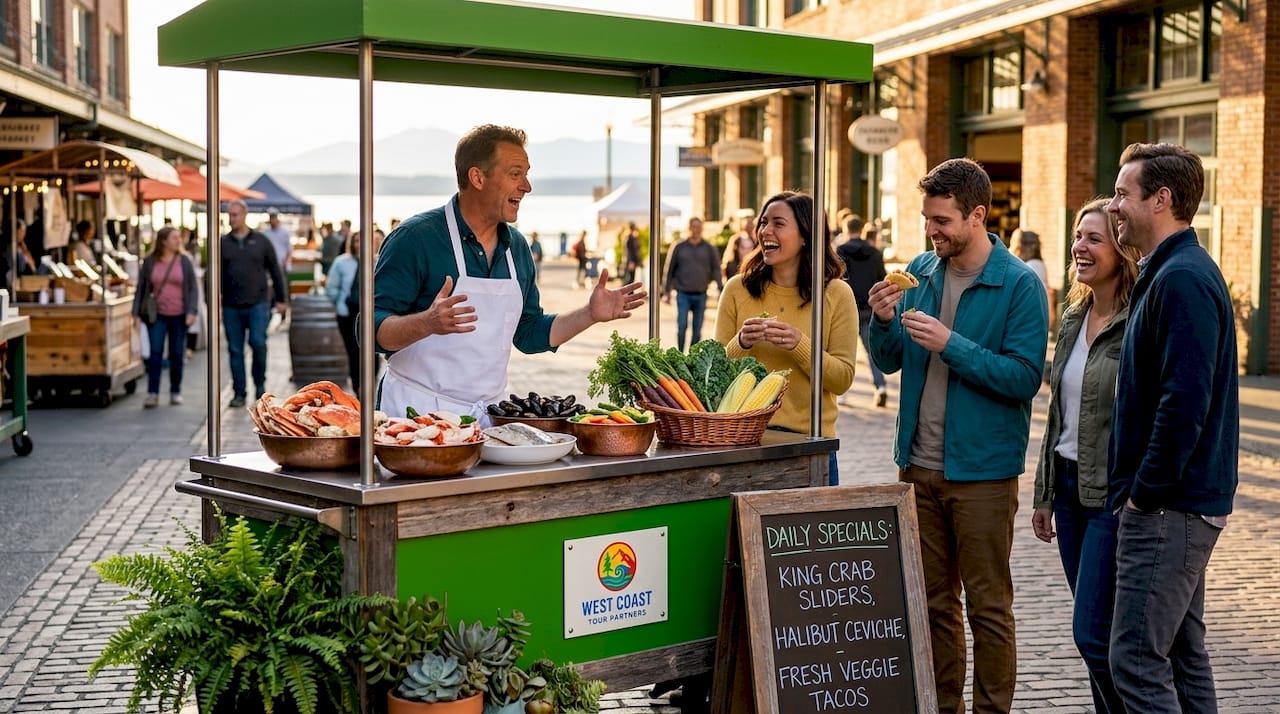
Guided food tours in Seattle are a particularly strong example of this principle. Chef-led food tours connect each tasting to a story about Seattle’s culinary evolution, from its Indigenous food traditions to the wave of Asian immigrants who built the International District to the current generation of chefs redefining Pacific Northwest cuisine. You’re not just eating. You’re learning why the food tastes the way it does and who made it possible.
Guided tours also provide access to hidden gems that never appear on standard tourist maps. A guide might take you to a rooftop with a view that only locals know about, or to a bookshop in Fremont that doubles as a community gathering space, or to a mural in the Central District painted by a Seattle artist whose work now hangs in galleries worldwide. These are the details that make a city feel real rather than staged.
Self-guided vs. guided: an honest comparison
Some visitors genuinely prefer exploring on their own, and that’s a legitimate choice. But for first-timers, the trade-offs are worth examining clearly.
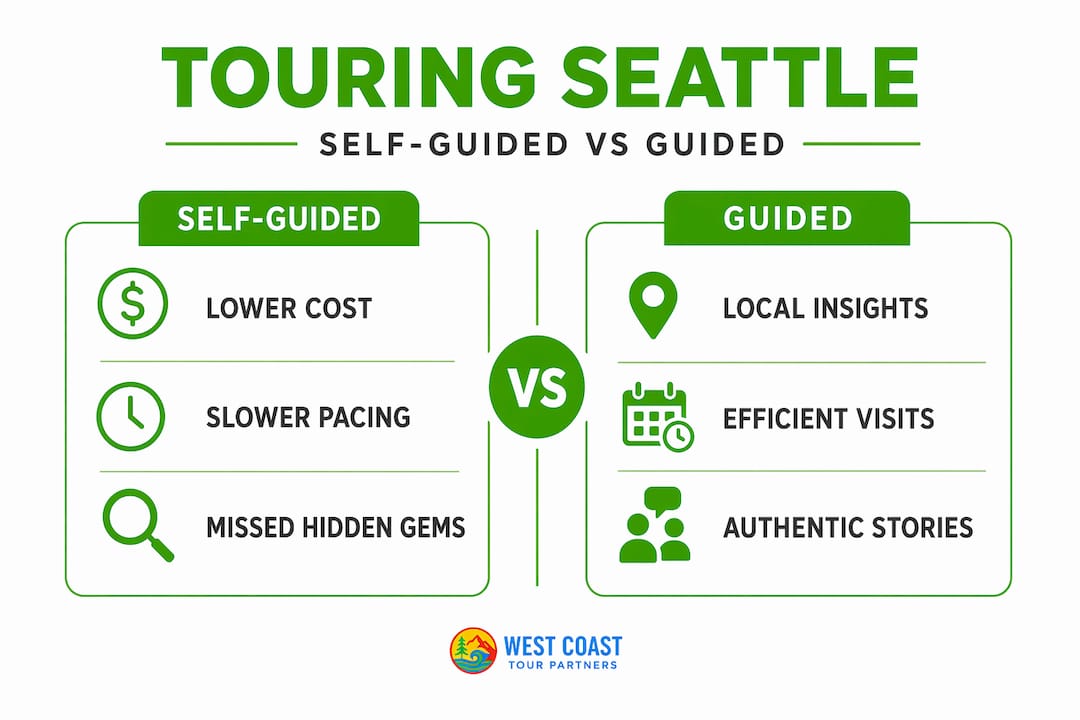
| Factor | Self-guided | Guided experience |
|---|---|---|
| Cost | Lower upfront | Higher upfront, but saves on wasted time and bad decisions |
| Flexibility | Full control of schedule | Structured but often includes free exploration windows |
| Local knowledge | Limited to research | Deep, current, and personal |
| Time efficiency | Variable, often slower | Optimized routing and pre-planned logistics |
| Cultural depth | Surface level without context | Historical, culinary, and social layers included |
| Hidden gems | Hard to find independently | Built into the experience by default |
The honest answer is that self-guided exploration rewards experienced urban travelers who have done significant research. For first-time visitors to Seattle, the gap in local knowledge is simply too wide to close with a few hours of pre-trip reading. The city rewards insiders, and guides are the fastest way to become one.
My take on why solo exploration falls short here
I’ve watched hundreds of first-time visitors arrive in Seattle with full confidence and a downloaded map. Most of them have a good time. But the ones who go with a guide? They come back with stories.
What I’ve learned from watching this city through the lens of experiential tourism is that Seattle’s depth is genuinely non-obvious. The rain myth alone sends visitors packing in October when the city is actually at its most atmospheric and least crowded. The neighborhoods that look walkable on a map are separated by elevation changes that feel brutal after hour three. And the cultural history packed into places like the International District or the Central District is invisible without someone who knows it and cares enough to share it.
My honest opinion is that conventional solo travel wisdom, the idea that you can figure out any city with a phone and a good attitude, breaks down in Seattle faster than most places. The city is too layered, too neighborhood-driven, and too physically demanding to absorb efficiently without help. I’ve seen visitors spend two days in the tourist corridor and leave thinking they’ve seen Seattle. They’ve seen the surface.
The guides who genuinely change a visit are the ones with personal connections to the neighborhoods they cover. They’re not reciting facts. They’re sharing a city they love, and that comes through in every story they tell.
— WCTP_Systems
Experience Seattle the way locals do
If you’re ready to move past the surface and actually feel what Seattle is about, West Coast Tour Partners has built exactly that kind of experience for first-time visitors.

West Coast Tour Partners offers immersive, story-driven tours that cover Pike Place Market’s hidden history, Seattle’s waterfront culture, and the neighborhoods most visitors never find on their own. The Market Experience takes you through Pike Place with guided storytelling, local food tastings, and interactive challenges that make the market feel alive rather than crowded. The Let’s Go Seattle! Shuttle turns transportation itself into part of the adventure, connecting you to key attractions with humor, music, and concierge-style guidance built in. Explore Seattle guided tours from West Coast Tour Partners and find the experience that fits your visit.
FAQ
Why do first-time visitors to Seattle need a guide?
Seattle’s neighborhood-driven character, hilly terrain, and layered cultural history make it genuinely difficult to absorb without local knowledge. Guides optimize routing, surface hidden gems, and add historical and culinary context that transforms sightseeing into real discovery.
What is the best way to get around Seattle as a first-time visitor?
The Link Light Rail and Seattle’s bus network cover most major attractions efficiently, with fares ranging from $2.25 to $3.00 one-way. Guides help first-timers use transit confidently and avoid the cost and stress of downtown parking.
How many days do you need in Seattle to see it properly?
A minimum of three days covers the essential sights, but four to five days gives you time to explore neighborhoods and the local food scene without rushing. A guide helps you use every day efficiently regardless of how long you stay.
Are guided tours worth it for independent travelers?
Yes, especially for first-timers. Self-guided exploration works well for experienced urban travelers with deep research, but guides provide current local knowledge, optimized routes, and cultural depth that no amount of pre-trip reading fully replicates.
What neighborhoods should first-time Seattle visitors prioritize?
Capitol Hill, Ballard, Fremont, the International District, and the Central District each offer distinct cultural experiences that go far beyond downtown. A guide helps you understand what makes each area unique and how to move between them efficiently.
Leave a Reply