
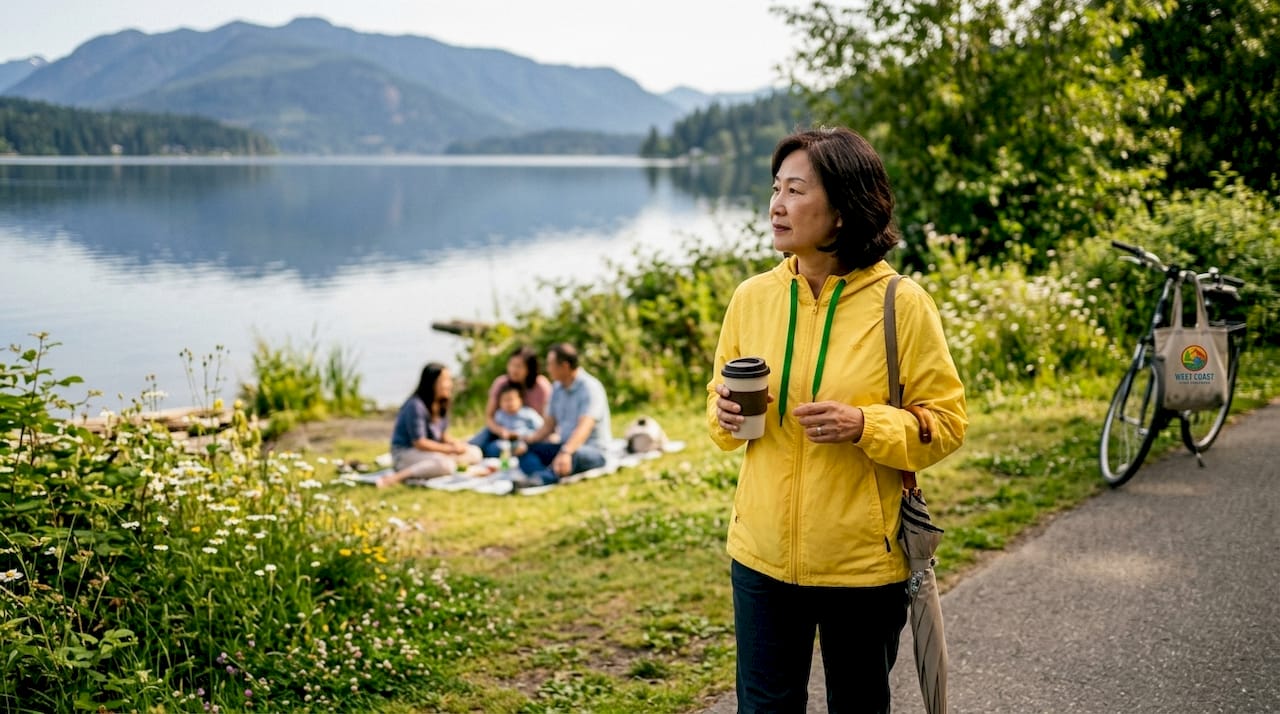
Seattle is a unique destination defined by its rare combination of urban energy, natural grandeur, and a local culture that refuses to be ordinary. No other American city places you within walking distance of a world-famous public market, a 605-foot observation tower, and a coastline stretching nearly 200 miles. Add quirky neighborhood art, a historic monorail, and some of the most distinct communities in the Pacific Northwest, and you have a city that rewards every type of traveler. Whether you are arriving by cruise ship or planning a full Seattle trip itinerary, the city delivers experiences you simply cannot replicate anywhere else.
Why seattle is a unique destination for nature lovers
Seattle’s geography is its most powerful asset. The city sits between Puget Sound to the west and Lake Washington to the east, with the Olympic Mountains and Cascade Range forming a dramatic backdrop on both horizons. That physical setting gives Seattle a visual identity unlike any other major American city.
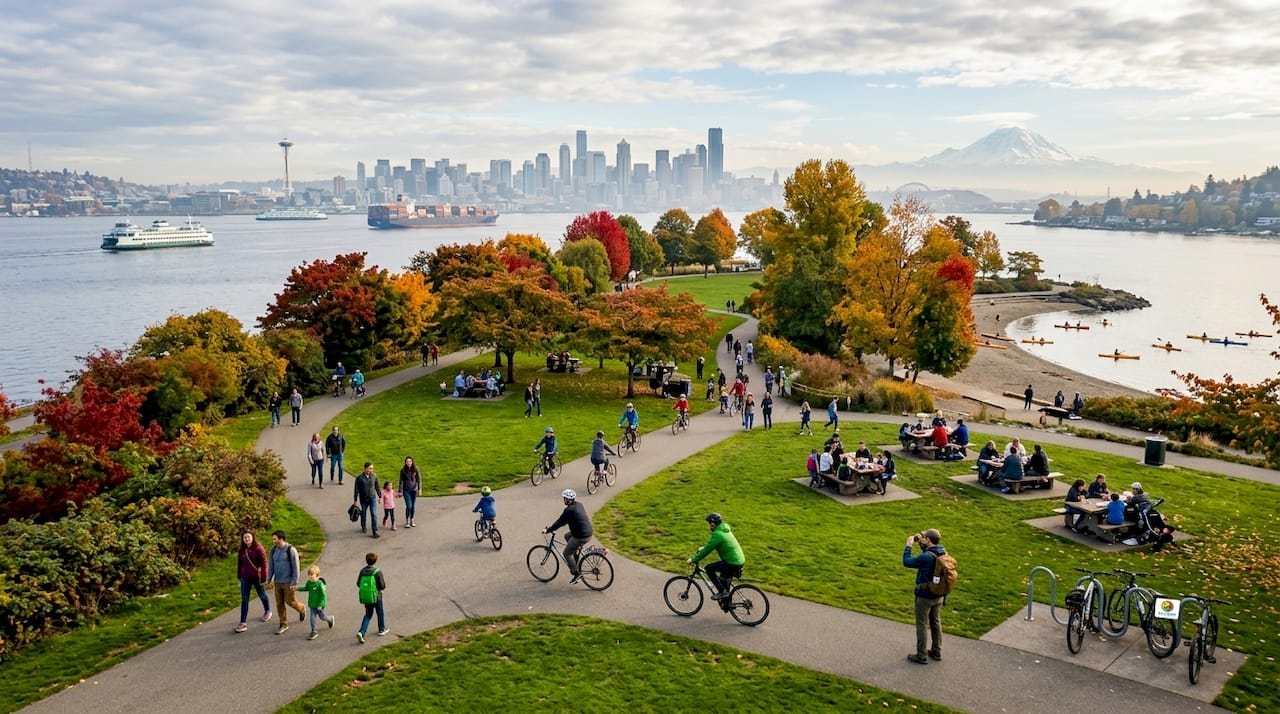
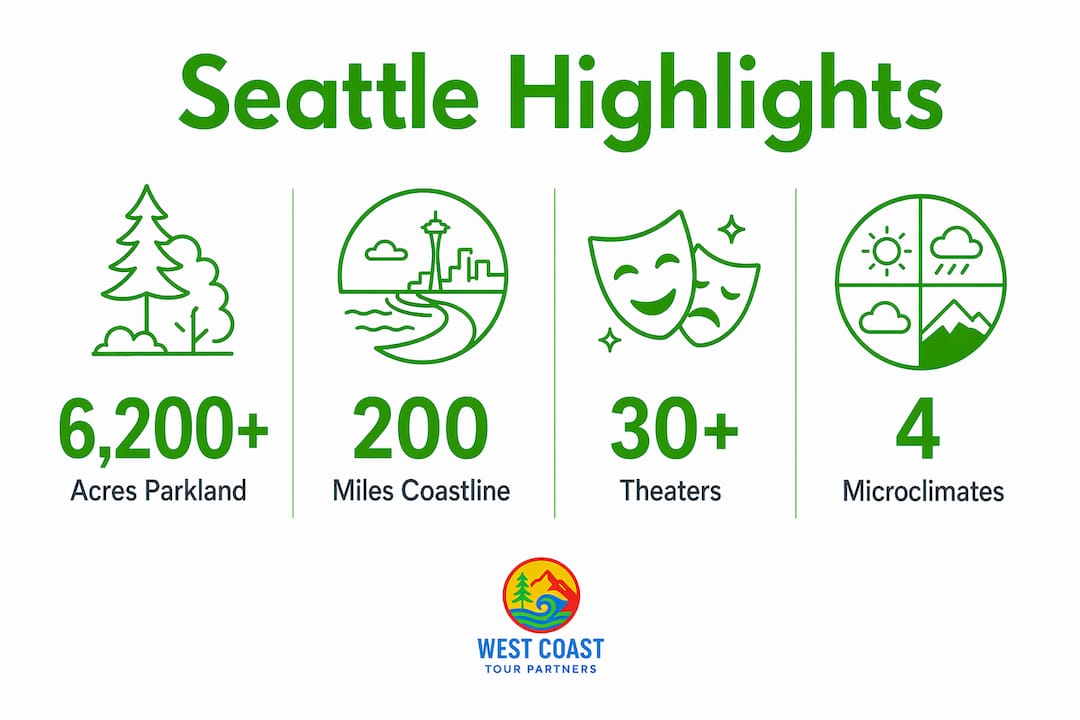
The numbers back this up. Seattle holds over 6,200 acres of city parkland and nearly 200 miles of combined freshwater and saltwater coastline. That density of green space and water access within a major urban area is genuinely rare. It means you can kayak on Lake Union in the morning, hike through Discovery Park in the afternoon, and watch the sun set over the Olympic Mountains from a waterfront restaurant, all in a single day.
Seattle’s microclimate variations also shape the visitor experience in ways most travelers do not anticipate. The city’s hills, water bodies, and surrounding forests create pockets of weather that shift dramatically across neighborhoods and seasons. A foggy morning on the waterfront can give way to brilliant afternoon light in Capitol Hill just two miles away. That dynamic quality makes Seattle feel alive and ever-changing, no matter how many times you visit.
| Natural Asset | What It Offers Visitors |
|---|---|
| 6,200+ acres of parkland | Hiking, cycling, and picnic spaces within city limits |
| 200 miles of coastline | Kayaking, whale watching, and waterfront dining |
| Olympic and Cascade backdrop | Panoramic views from multiple city vantage points |
| Microclimate variation | Distinct weather and light experiences across neighborhoods |
Pro Tip: Pack layers regardless of the season. Seattle’s microclimates mean you can experience four types of weather in a single afternoon, and being prepared lets you stay out longer and see more.
What makes seattle’s landmarks genuinely unforgettable
Seattle’s iconic landmarks are well known, but what makes them special is the story and character layered beneath the surface. These are not just photo stops. They are living pieces of the city’s identity.
- The Space Needle opened in 1962 for the World’s Fair and still defines Seattle’s skyline. Its observation deck at 520 feet delivers 360-degree views of the city, the Sound, and both mountain ranges on clear days. The rotating glass floor added in 2018 is not for the faint of heart.
- Pike Place Market is the cultural heart of Seattle, operating continuously since 1907. It is one of the oldest continuously operating farmers markets in the United States. The Seattle Market District is a sensory-rich world of fish vendors, flower stalls, local artisans, and hidden corridors most visitors never find.
- The Gum Wall began in the 1990s when theatergoers waiting outside Unexpected Productions improv theater started sticking gum to the brick wall. What started as a spontaneous act became a 50–54 foot long installation built over more than 30 years. It is one of the most genuinely community-created public art pieces in the world.
- The Seattle Monorail connects downtown to Seattle Center in just 2 minutes. Built for the 1962 World’s Fair, it remains a functioning transit line and a piece of living history.
- Pier 57 is home to a Ferris wheel with gondola dining, where you can eat a meal suspended over Elliott Bay. There is no comparable dining experience in any other American city.
Pro Tip: Visit Pike Place Market before 9 a.m. to see vendors setting up, hear the fish vendors rehearsing their throws, and walk the lower levels without crowds. The market’s hidden lower floors contain some of Seattle’s best small shops and oldest businesses.
How seattle’s neighborhoods shape an authentic local experience
Seattle’s most rewarding travel experiences happen outside the downtown tourist corridor. The city’s distinct neighborhoods each carry their own personality, history, and local rhythm.
- Capitol Hill is Seattle’s arts and nightlife hub, packed with independent theaters, live music venues, and some of the city’s most celebrated restaurants. It has a strong LGBTQ+ community presence and a walkable grid that rewards slow exploration.
- Ballard was once a Scandinavian fishing village and still carries that heritage in its architecture, seafood restaurants, and the historic Hiram M. Chittenden Locks, where you can watch boats transition between saltwater and freshwater.
- Fremont calls itself “the Center of the Universe” and backs it up with a giant Lenin statue, a troll sculpture under the Aurora Bridge, and an outdoor Sunday market that draws locals year-round.
- South Lake Union represents Seattle’s tech-driven transformation, anchored by Amazon’s urban campus and a collection of modern restaurants and waterfront parks that show how the city balances innovation with livability.
Ferries and water taxis connect neighborhoods in ways that no other American city replicates. Taking a water taxi from downtown to West Seattle gives you a 15-minute harbor crossing with skyline views that rival any boat tour. Locals use these routes daily. Visitors who discover them find themselves experiencing the city the way residents actually do.
Gas Works Park on the north shore of Lake Union is one of the most striking examples of adaptive reuse in American urban design. The city preserved the rusting towers and machinery of a former coal gasification plant rather than demolishing them, turning industrial ruins into a public park with one of the best views of the Seattle skyline. This approach set a global precedent in landscape architecture and tells you something important about Seattle’s character. The city does not erase its past. It repurposes it.
How seasonal rhythms and local culture deepen your seattle visit
Seattle’s character shifts with the seasons, and understanding that rhythm helps you get far more from your visit. Summer brings long days with 16 hours of daylight, outdoor concerts at Marymoor Park, and whale watching tours in Puget Sound. Fall delivers the city’s famous moody light, which photographers and filmmakers prize for its soft, diffused quality.
The Volunteer Park Conservatory in Capitol Hill is one of Seattle’s most overlooked cultural attractions. Built in 1912, it houses tropical plants in a Victorian glass greenhouse. What most visitors do not know is that it also serves as a U.S. Fish and Wildlife Service repository for confiscated tropical plants seized at customs. That conservation function adds a layer of meaning to what might otherwise seem like a simple garden visit.
Seattle’s live theater scene is another dimension most tourists miss entirely. The city supports more than 30 professional theater companies, including the Seattle Repertory Theatre and ACT Theatre. The Gum Wall itself grew out of the theater community at Unexpected Productions, which still performs improv comedy in the same Pike Place Market location where the wall began. Culture and place are inseparable in Seattle in ways that take time to appreciate.
Seattle rewards visitors who slow down and look beyond the major landmarks. The city’s identity is built on the coexistence of urban life and nature, not on a strict separation between the two. Parks like Gas Works and the Burke-Gilman Trail running 27 miles through the city’s neighborhoods make that integration tangible. Give yourself at least three days, and spend at least one of them without a fixed itinerary.
Key takeaways
Seattle’s uniqueness as a destination comes from the inseparable combination of natural geography, community-built culture, and neighborhoods that reward genuine exploration over checklist tourism.
| Point | Details |
|---|---|
| Nature inside the city | Over 6,200 acres of parkland and 200 miles of coastline sit within Seattle’s city limits. |
| Landmarks with real history | The Space Needle, Pike Place Market, and the Gum Wall each carry decades of authentic local story. |
| Neighborhoods over downtown | Capitol Hill, Ballard, and Fremont offer experiences that downtown tourist routes cannot replicate. |
| Water transit as an experience | Ferries and water taxis give visitors a local perspective and some of the best city views available. |
| Seasonal depth | Seattle’s microclimates and seasonal rhythms create meaningfully different visits across the year. |
Seattle’s uniqueness is earned, not handed to you
I have spent years helping visitors experience Seattle, and the single most common mistake I see is treating the city like a checklist. People photograph the Space Needle, buy salmon at Pike Place, and leave thinking they have seen Seattle. They have seen the cover. The book is far richer.
The visitors who leave genuinely moved are the ones who took the water taxi to West Seattle on a whim, stumbled into a Fremont Sunday market, or spent an hour in the lower levels of Pike Place talking to a vendor who has been there for 30 years. Seattle’s depth is not hidden. It is just slightly off the obvious path.
What surprises me most, even now, is how the city’s natural setting never becomes background noise. You can be deep in a conversation at a Capitol Hill coffee shop and suddenly notice Mount Rainier filling the window behind your friend’s head. That kind of moment does not happen in most cities. Seattle earns its reputation not through spectacle alone, but through the quiet accumulation of moments that feel specific to this place and nowhere else.
If you are planning your first visit, build in time to be unscheduled. Walk toward water. Take a ferry somewhere. Let the city show you what it actually is.
— WCTP_Systems
Experience seattle the way it was meant to be explored
Knowing what makes Seattle special is one thing. Actually living it is another. West Coast Tour Partners designs every experience around the idea that the best travel memories come from stories, not schedules.
From The Market Experience at Pike Place Market, which takes you through hidden corridors, local tastings, and the market’s layered history, to ScooTours through waterfront neighborhoods and the Let’s Go Seattle! Shuttle connecting you from the cruise terminal to the city’s best spots, West Coast Tour Partners turns sightseeing into something you will actually talk about when you get home. Start planning your Seattle visit at West Coast Tour Partners and find the experience that fits your travel style.
FAQ
What makes seattle different from other pacific northwest cities?
Seattle combines a major urban core with direct access to mountains, saltwater coastline, and over 6,200 acres of city parkland. That geographic density, paired with a distinct neighborhood culture and landmarks like Pike Place Market and the Space Needle, sets it apart from Portland or Vancouver.
When is the best time to visit seattle?
Summer (june through september) offers the longest days and the most outdoor activity options, including whale watching and outdoor concerts. Fall and spring are ideal for travelers who prefer smaller crowds and Seattle’s famous atmospheric light.
Is pike place market worth visiting beyond the fish toss?
Pike Place Market is worth at least two visits. The lower levels contain independent shops, artists, and vendors that most tourists never reach. The market’s history stretches back to 1907, and the stories embedded in its corridors go far deeper than the famous fish counter.
How do seattle’s neighborhoods differ from the downtown tourist area?
Neighborhoods like Capitol Hill, Ballard, and Fremont each have distinct identities shaped by local history, independent businesses, and community culture. Exploring these areas by ferry or water taxi gives you a perspective on Seattle that downtown sightseeing alone cannot provide.
What is the gum wall and why do people visit it?
The Gum Wall is a 50–54 foot long public art installation in Pike Place Market’s Post Alley, built over more than 30 years by visitor contributions. It originated in the 1990s outside Unexpected Productions improv theater and has become one of Seattle’s most photographed and genuinely community-created landmarks.
Recommended
- What to Know Before Visiting Seattle: 2026 Guide – West Coast Tour Partners
- Top 3 eatseattletours.com Alternatives Providers 2026 – West Coast Tour Partners
- Top 4 savorseattle.com Alternatives Providers 2026 – West Coast Tour Partners
- Plan Seattle Sightseeing Around Your Match Schedule – West Coast Tour Partners
Leave a Reply