
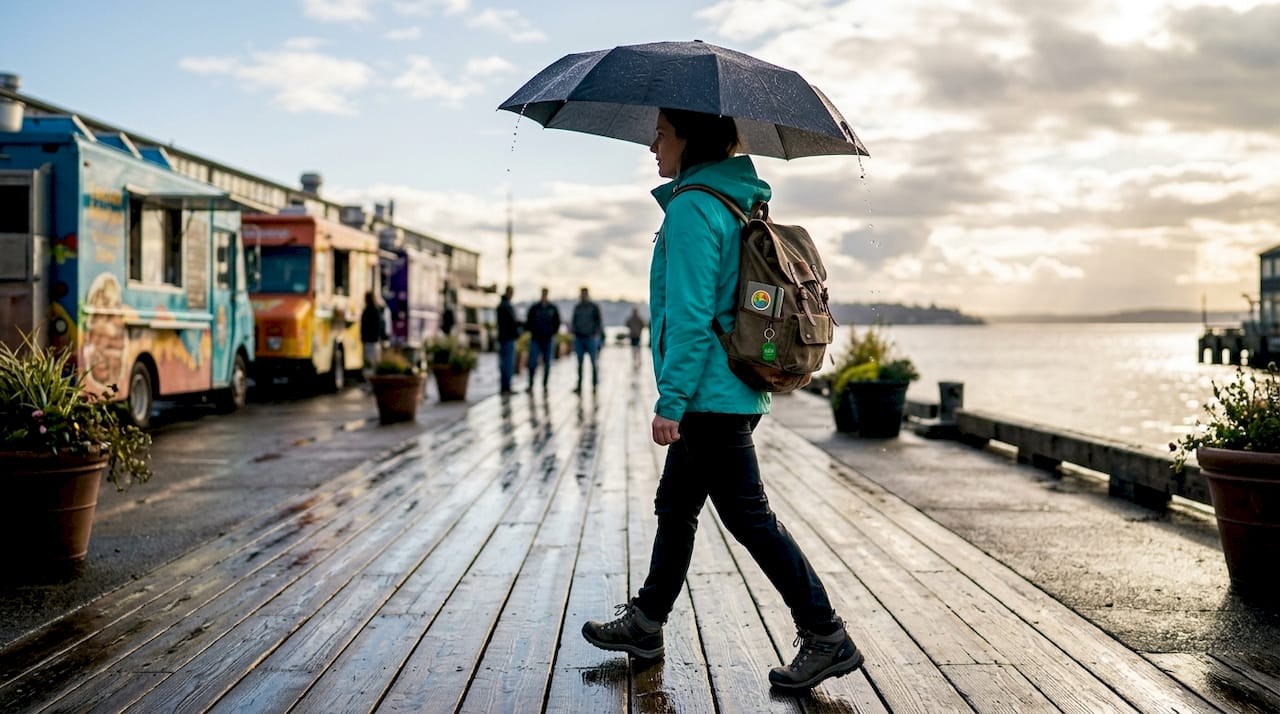
Seattle’s weather impact on touring is direct, measurable, and season-specific. Rain, fog, microclimates, and rare snow events each shape what you can do, where you can go, and how much you will pay on any given visit. Understanding Seattle’s climate effects on travel before you book means fewer surprises and a far more satisfying trip. The city rewards prepared visitors with stunning waterfront views, vibrant neighborhoods, and world-class experiences at Pike Place Market and beyond. September stands out as the single best month to visit, and the Puget Sound convergence zone is the weather phenomenon most likely to disrupt your morning plans.
How Seattle weather affects your touring experience by season
The best time to tour Seattle falls between late May and mid-September, when temperatures stay comfortable, daylight stretches past 9 p.m., and outdoor sightseeing is genuinely pleasant. That window covers Pike Place Market strolls, waterfront walks, ScooTours through Capitol Hill, and ferry rides across Puget Sound without the constant threat of a soaking downpour.
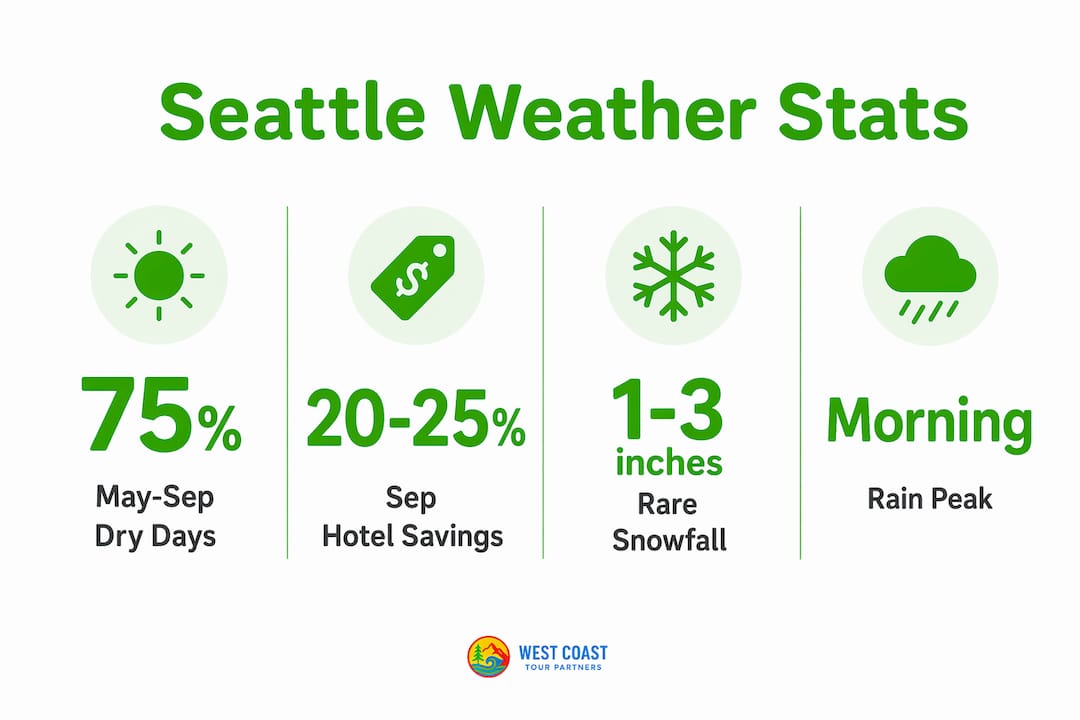
September deserves special attention. It delivers warm, clear weather while also offering a 20-25% reduction in hotel prices compared to peak August rates. That combination of good weather and lower costs makes it the smartest month on the calendar for budget-conscious travelers who still want sunshine.
Winter tells a different story. Traveling between November and February unlocks 30-40% savings on hotels and flights, but those months coincide with Seattle’s heaviest rainfall. Outdoor sightseeing becomes less comfortable, and some waterfront experiences lose their appeal in persistent drizzle. The trade-off is real: you save money, but you shift your itinerary toward indoor attractions like the Museum of Pop Culture, the Seattle Art Museum, and covered market experiences.
Here is a quick seasonal breakdown to guide your planning:
- May to September: Best overall touring window. Warm, drier, and ideal for outdoor activities.
- September: Peak value month. Lower hotel prices, warm temperatures, and reduced crowds.
- October: Transitional. Expect increasing rain but still manageable for sightseeing.
- November to February: Low season. Heavy rain, significant savings, and indoor-focused itineraries.
- March to April: Unpredictable. Spring showers are frequent, but cherry blossoms and fewer crowds offer appeal.
| Season | Weather Conditions | Touring Impact |
|---|---|---|
| May to September | Warm, mostly dry | Best for outdoor tours and waterfront activities |
| September specifically | Clear, warm, post-peak | Ideal balance of weather and hotel savings |
| October | Increasing rain | Good for mixed indoor/outdoor itineraries |
| November to February | Heavy rain, occasional fog | Budget travel with indoor-focused touring |
| March to April | Variable, frequent showers | Moderate outdoor access, lighter crowds |
Pro Tip: Book your Seattle hotel for the first two weeks of September rather than August. You get nearly identical weather with noticeably lower prices and shorter lines at major attractions.
What are Seattle’s microclimates and why do they matter for tourists?
Seattle’s microclimates are localized weather zones created by the city’s surrounding geography, including Puget Sound, the Cascade Mountains, and the Olympic Peninsula. These zones mean that two neighborhoods just a few miles apart can experience completely different weather at the same moment. A tourist relying on a single citywide forecast can be caught off guard repeatedly.

The Puget Sound convergence zone is the most disruptive of these phenomena. It forms when air flows split around the Olympic Mountains and reconverge over the Seattle metro area, producing sudden, intense rain pockets that can drench one neighborhood while leaving another dry. Rain chances during unsettled spring mornings reach 60-70%, with conditions often improving dramatically after 3 p.m. This pattern means morning tours carry more weather risk than afternoon outings, a fact worth building into your daily schedule.
Radiation fog at Seattle-Tacoma International Airport presents a separate but equally serious concern for arriving and departing travelers. Dense fog can reduce visibility to near zero, triggering low-visibility procedures that cut airport throughput by up to 40%. In May 2026 alone, fog and radar issues caused 111 flight delays and 14 cancellations at SEA. If your tour itinerary depends on a tight arrival window, fog season adds real risk to your plans.
Key microclimate facts every Seattle tourist should know:
- The Puget Sound convergence zone can trigger intense, localized rain with little warning, especially in spring.
- Radiation fog at SEA Airport is most common in fall and early winter mornings.
- Capitol Hill and Queen Anne sit at higher elevations and experience more wind and cold than the waterfront.
- The waterfront and Pioneer Square often stay drier than inland neighborhoods during convergence zone events.
- Neighborhoods near light rail stations offer more reliable transit access when weather disrupts surface traffic.
“Seattle’s weather doesn’t just change day to day. It changes block to block. Tourists who check a neighborhood-specific forecast rather than a citywide one make smarter decisions about where to go and when.”
How does Seattle weather create logistical challenges for visitors?
Weather in Seattle creates logistical friction that goes well beyond carrying an umbrella. The city’s hilly terrain, limited snow removal infrastructure, and proximity to mountain passes all combine to create disruption patterns that catch unprepared visitors off guard.
Snow is rare in Seattle, but when it arrives, the impact is outsized. The city’s limited snow plowing capacity means even 1-3 inches of accumulation can paralyze steep residential streets in neighborhoods like Queen Anne and Capitol Hill for multiple days. Buses reroute, rideshares become scarce, and tourists relying on surface transit find themselves stranded. Light rail lines, by contrast, continue operating through most snow events, making neighborhoods along the Link Light Rail corridor significantly more resilient for weather-disrupted touring.
Mountain passes add another layer of risk for visitors planning day trips. Atmospheric rivers can dump 2-3 feet of snow on Snoqualmie Pass or Stevens Pass in a matter of hours, closing roads with little advance warning. Lowland forecasts often fail to predict mountain accumulation accurately, which means a day trip to the Cascades can turn into an unexpected overnight stay. Always check the Washington State Department of Transportation pass report before heading east.
Here is a practical preparation checklist for managing Seattle’s weather logistics:
- Pack a rain shell, not just an umbrella. Wind off Puget Sound makes umbrellas impractical. A waterproof jacket with a hood is the single most useful item you can bring.
- Layer clothing for rapid temperature swings. Mornings can be 50°F and afternoons can reach 70°F in the same day during shoulder seasons.
- Check the SEA Airport fog forecast the night before departure. Early morning flights carry the highest fog delay risk in fall and winter.
- Book accommodations near a Link Light Rail station. This insulates your itinerary from surface traffic disruptions caused by rain, snow, or accidents.
- Build buffer time into mountain day trips. Pass closures happen fast, and the return window can shrink without warning.
- Plan morning tours indoors and afternoon tours outdoors. The convergence zone clears most days by mid-afternoon, giving you better conditions for outdoor sightseeing.
Pro Tip: Local travel experts consistently recommend packing multiple layers and a dedicated rain shell regardless of the season. Seattle’s weather shifts fast, and being caught underprepared ruins more itineraries than the rain itself.
How do weather patterns affect Seattle’s outdoor events and touring scene?
Seattle’s weather shapes not just what tourists experience but also what events and touring acts choose to bring to the city. The Pacific Northwest’s geographic isolation and weather unpredictability have measurable effects on the live event calendar that directly affect visitor itineraries.
Touring artists increasingly avoid Seattle due to its position in the “Upper Left,” where long road distances and weather risk make routing expensive and logistically complex. Artists managing tours under three weeks often skip Seattle entirely to reduce cost and exposure to weather-related cancellations. This means the city’s live event calendar can be thinner than its population and music heritage would suggest, particularly outside the summer window.
Climate risk modeling has entered the touring industry in a serious way. Booking agents and promoters now use enterprise-level climate data to route tours away from regions with high storm probabilities, including parts of the Pacific Northwest during winter months. This shift from intuition to data-driven routing means fewer outdoor events in Seattle between October and April, and a concentration of major shows in the June-to-September window.
For tourists attending outdoor events, the practical implications are clear. Bring a rain shell to any outdoor concert or festival regardless of the forecast. Wind off the water can make a 60°F evening feel significantly colder. Check event cancellation and rain policies before purchasing tickets, since many Seattle outdoor venues have limited shelter. And if your visit centers on a specific event, build a backup day into your itinerary in case weather forces a postponement.
Key takeaways
Seattle’s weather impact on touring is most manageable when you choose September, stay near light rail, and plan outdoor activities for the afternoon rather than the morning.
| Point | Details |
|---|---|
| September is the optimal month | Hotel prices drop 20-25% from August while weather stays warm and clear. |
| Convergence zone disrupts mornings | Rain chances hit 60-70% on unsettled spring mornings; afternoon touring is safer. |
| SEA Airport fog causes real delays | Radiation fog cut airport throughput by 40% and caused 111 delays in May 2026. |
| Snow paralyzes steep neighborhoods | Even minor snowfall disrupts transit in Queen Anne and Capitol Hill for days. |
| Layer up regardless of season | A rain shell and layered clothing protect against rapid weather shifts year-round. |
What I’ve learned from watching tourists get caught off guard by Seattle’s weather
Most visitors arrive with one of two wrong assumptions. Either they expect constant rain and pack for a monsoon, or they check a sunny forecast and leave their jacket at the hotel. Both approaches lead to frustration. Seattle’s weather is genuinely variable in a way that rewards flexibility over prediction.
The convergence zone is the detail that surprises people most. I have watched tourists cancel morning waterfront plans because of heavy rain, only to see the sky clear completely by 1 p.m. The pattern is consistent enough that building a flexible morning into your itinerary is not just a nice idea. It is the single most effective scheduling adjustment you can make.
Neighborhood choice matters more than most travel guides acknowledge. Staying near Capitol Hill or the University District puts you on light rail, which keeps running when surface streets become chaotic. Staying in Belltown or the waterfront area puts you close to Pike Place Market and the ferry terminals, which are worth the trade-off in summer but feel exposed in winter wind and rain.
My honest advice: treat Seattle’s weather as a feature, not a problem. The city’s moody skies, misty mornings, and sudden sunshine are part of what makes it feel alive and distinct. Prepare well, stay flexible, and you will find that the weather adds texture to your experience rather than ruining it.
— WCTP_Systems
Let West Coast Tour Partners take the weather out of the equation
Rain or shine, Seattle delivers extraordinary experiences when you have the right guide. West Coast Tour Partners designs every tour to work beautifully regardless of conditions, from the covered, story-rich corridors of Pike Place Market to the energetic ScooTours that turn a drizzly afternoon into an adventure. The Let’s Go Seattle! Shuttle keeps your group moving comfortably between the waterfront, cruise terminals, and top attractions without weather ever becoming a barrier.

Whether you are a cruise passenger with a single day in port or a family planning a full week of exploration, West Coast Tour Partners builds flexibility and local expertise into every experience. Explore Seattle tours and experiences with a team that knows exactly how to read the city’s weather and make every moment count.
FAQ
What is the best month to visit Seattle for good weather?
September is the best single month for touring Seattle, offering warm and clear conditions alongside hotel prices 20-25% lower than the August peak. The combination of pleasant weather and reduced crowds makes it the strongest value on the calendar.
How does Seattle rain affect outdoor sightseeing?
Rain is most disruptive in the morning, particularly during spring, when the Puget Sound convergence zone pushes rain chances to 60-70% before 3 p.m. Scheduling outdoor sightseeing for the afternoon significantly reduces your exposure to wet conditions.
Can Seattle snow disrupt tourist transportation?
Yes. Even 1-3 inches of snow can cause multi-day transit disruptions on Seattle’s steep streets due to limited snow plowing infrastructure. Tourists staying near Link Light Rail stations experience far fewer disruptions, since rail service continues through most snow events.
Will fog at SEA Airport affect my travel plans?
Radiation fog at Seattle-Tacoma International Airport can reduce visibility to near zero and cut airport throughput by up to 40%, leading to cascading delays. Fog risk is highest on fall and early winter mornings, so booking afternoon flights during those seasons reduces your exposure.
How should I pack for a Seattle tour?
Pack a waterproof rain shell and multiple clothing layers regardless of the season. Local travel experts consistently recommend this approach because Seattle temperatures can swing 20°F within a single day, and wind off Puget Sound makes umbrellas impractical in most conditions.
Leave a Reply