
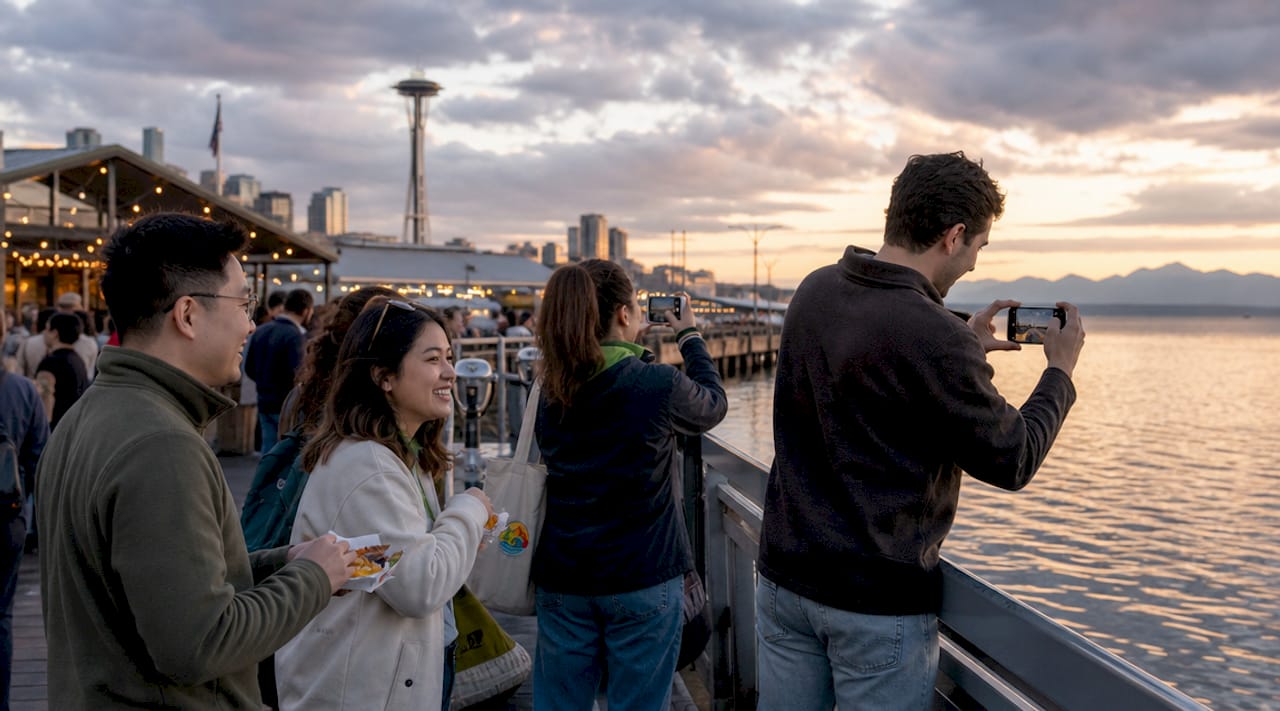
Seattle is one of the most misunderstood cities in America, and knowing the real facts before you arrive separates a frustrating trip from an unforgettable one. Most visitors pack wrong, skip the best neighborhoods, and overpay for experiences that locals get for free. This guide covers what to know before visiting Seattle, from the truth about the rain to which transit card saves you the most money, so you can spend less time figuring things out and more time actually enjoying the city.
What to know before visiting Seattle: the essentials at a glance
Seattle’s reputation as a rain-soaked city is technically accurate but deeply misleading. The city receives 38 inches of annual rainfall spread across 150 days, which means the precipitation is frequent but almost always light. That distinction matters because you are not packing for monsoons. You are packing for persistent, fine mist that coats everything without ever quite becoming a downpour. Understanding this shapes every decision you make, from your gear to your itinerary.
Three named realities define Seattle travel: the weather pattern, the transit system, and the neighborhood culture. Get all three right and the city opens up in ways that most tourists never experience.
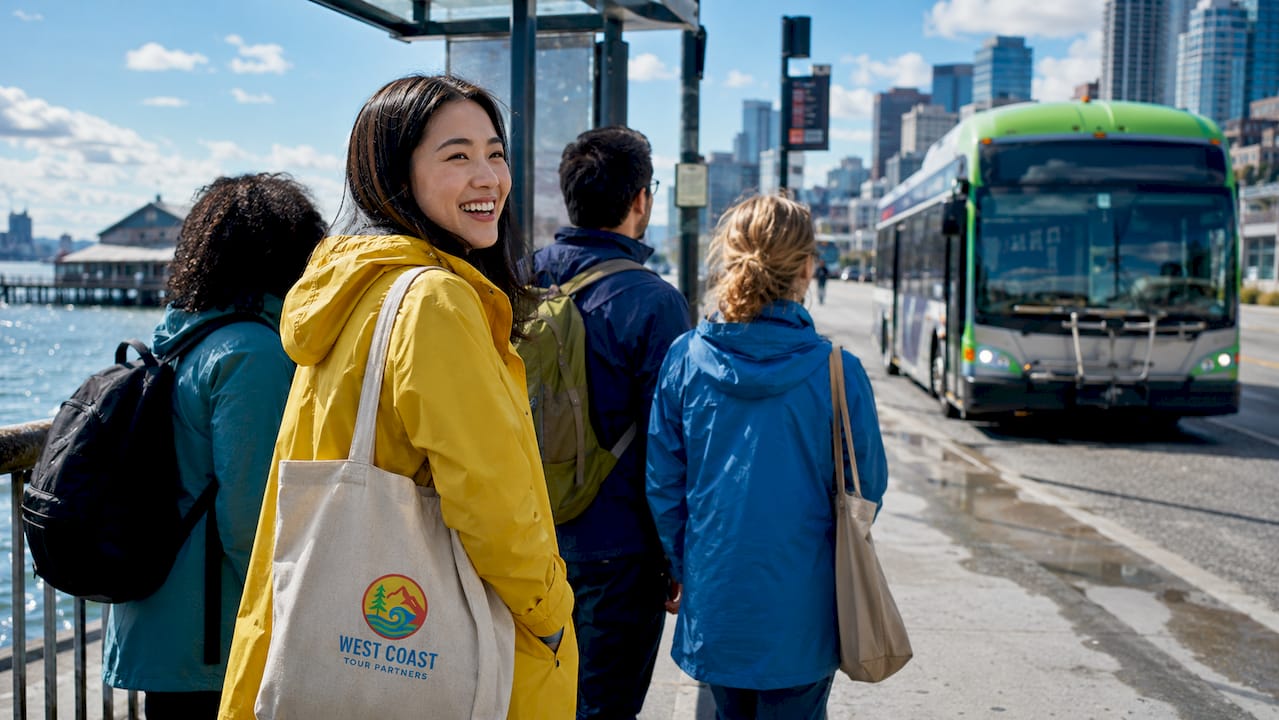
What is Seattle’s weather really like and how should you prepare?
Seattle’s driest and most visitor-friendly window runs from July through September. July averages just 0.7 inches of rain with temperatures between 65 and 75°F, making it the single best month to visit if sunshine is your priority. August and September follow closely, offering long daylight hours and the kind of clear skies that make the Space Needle and Puget Sound views genuinely spectacular.
Outside that summer window, Seattle enters what locals call the “Big Dark.” Gray skies and atmospheric mist create a unique lighting that photographers love but unprepared visitors find oppressive. The key to enjoying fall and winter visits is layering, not waterproofing. A moisture-wicking base layer, a fleece mid-layer, and a waterproof shell on top will handle nearly every weather scenario the city throws at you.
Here is what to pack for any Seattle trip:
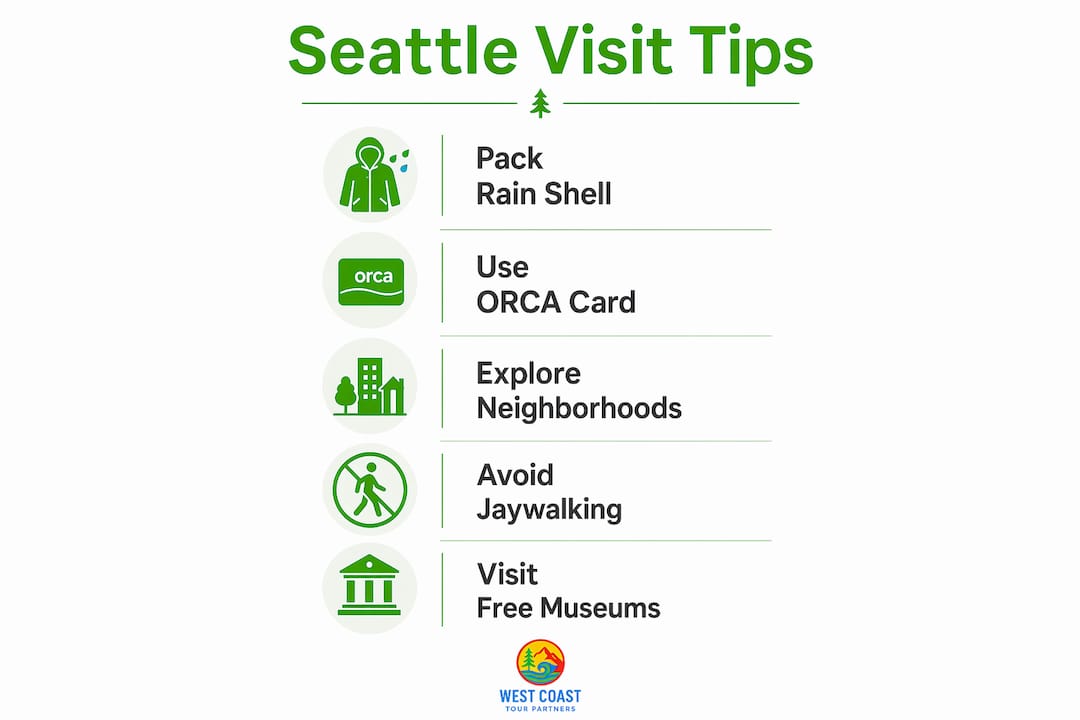
- A waterproof rain shell or waterproof jacket (not a heavy raincoat)
- Comfortable, waterproof walking shoes with solid grip for Seattle’s steep hills
- Layers you can add or remove as temperatures shift throughout the day
- Sunglasses for summer visits when UV is stronger than the mild temperatures suggest
- A small daypack to carry layers as you move between neighborhoods
Locals rarely use umbrellas. Wind makes them impractical, and carrying one immediately marks you as a tourist. A good rain shell handles the drizzle without the awkwardness, and it packs flat into any bag. This is one of those small cultural adjustments that makes a genuine difference in how you experience the city.
Pro Tip: Buy your rain shell before you arrive. Outdoor gear stores in Seattle like REI (which was founded in Seattle) stock excellent options, but prices are higher than ordering in advance. A mid-weight shell from a brand like Patagonia or Columbia covers 90% of Seattle weather situations.
How to get around Seattle without renting a car
Seattle’s public transit system is more capable than most visitors realize, and renting a car downtown is often the worst decision you can make. Parking costs are high, traffic during peak hours is genuinely punishing, and most of the city’s best experiences are concentrated in walkable, well-connected neighborhoods.
The most efficient way to move through the city follows this sequence:
- Get an ORCA card at the airport. The ORCA card and Transit GO Ticket app integrate buses, light rail, and streetcars into one payment system. Load it once and tap your way across the city without fumbling for cash or buying individual tickets.
- Take Link Light Rail from the airport. The Link Light Rail connects Seattle-Tacoma International Airport to downtown in roughly 40 minutes, running every 8 to 12 minutes during the day. It is faster and cheaper than a taxi or rideshare during peak hours.
- Walk downtown and Capitol Hill. Both neighborhoods are compact and highly walkable, though Seattle’s hills will test your legs. Wear shoes with real support.
- Use rideshares for evening travel. Lyft and Uber are reliable for late-night trips when transit frequency drops. They are also useful for reaching neighborhoods like Ballard that require a bus transfer.
- Reserve a car only for day trips. Driving is practical when you want to reach Mount Rainier National Park, the San Juan Islands ferry terminals, or Snoqualmie Falls. For anything inside the city, transit wins.
Peak rush hours run from 7 to 9 AM and 3 to 6 PM. If you are traveling between the airport and downtown during those windows, Link Light Rail is not just cheaper. It is genuinely faster than any surface road option.
Pro Tip: The ORCA card gives you a transfer credit within two hours of your first tap. If you tap onto a bus and then transfer to light rail within that window, you only pay once. This saves meaningful money over a multi-day visit.
Which Seattle neighborhoods are worth your time?
Seattle’s tourist circuit and Seattle’s actual culture occupy different zip codes. Pike Place Market, the Space Needle, and Chihuly Garden and Glass are genuine must-sees, but limiting yourself to downtown means missing the city’s real personality.
Here is where to go beyond the obvious:
- Capitol Hill is Seattle’s most energetic neighborhood, home to independent coffee roasters, a thriving LGBTQ+ community, live music venues, and restaurants that reflect the city’s Pacific Rim culinary influences. It sits one Link Light Rail stop from downtown, making it effortless to reach.
- Ballard carries Seattle’s Scandinavian fishing heritage in its architecture and culture, alongside a brewery scene that rivals any neighborhood in the Pacific Northwest. The Ballard Locks, where boats pass between Puget Sound and Lake Union, are free to visit and genuinely fascinating.
- Fremont calls itself the “Center of the Universe” without irony. Public art installations, including a 53-foot Cold War-era Soviet rocket and a bronze statue of Lenin, define its bohemian character. The Sunday Fremont Market runs year-round and offers local crafts, vintage goods, and street food.
- The International District is where Seattle’s culinary identity becomes most vivid. Pacific Rim cultural influences shape every block, from Vietnamese pho shops to Japanese izakayas to Filipino bakeries. Lunch here costs a fraction of what you would pay on the waterfront.
Seattle’s hills can be physically demanding, so plan your neighborhood days with elevation in mind. Capitol Hill and First Hill live up to their names. Wear shoes you would actually hike in.
What practical tips help you save money and avoid tourist mistakes?
Smart Seattle travel is about knowing where the locals actually spend their time and money, and where the tourist premium is simply not worth paying.
| Situation | Tourist approach | Local approach |
|---|---|---|
| Morning coffee | Original Starbucks at Pike Place (long line, same coffee) | Victrola Coffee, Lighthouse Coffee, or Caffe Vita in Capitol Hill |
| Lunch budget | Waterfront restaurants ($20-$35 per person) | International District or Pike Place Market stalls ($8-$15) |
| Museum admission | Full-price weekday visits | First Thursday free nights at Seattle Art Museum and Museum of Flight |
| Groceries and snacks | Hotel minibar or convenience stores | QFC, Metropolitan Market, or Trader Joe’s |
| Getting around | Rental car with downtown parking ($30-$50/day) | ORCA card and Link Light Rail |
Seattle Art Museum and Museum of Flight offer free admission on the first Thursday of every month. The Frye Art Museum is free every single day of the year, with a permanent collection that includes 19th-century European paintings most visitors never discover. These are not compromises. They are genuinely excellent museums.
Hotel rates drop up to 50% during the off-peak months of November through February. If your schedule is flexible and weather is not your top priority, a winter visit delivers the same city at half the accommodation cost.
One local law catches visitors off guard: jaywalking fines in downtown Seattle can reach $56. Enforcement is active near busy intersections. Wait for the walk signal, especially on Pike Street and 1st Avenue, where traffic officers are a regular presence.
Pro Tip: Budget travelers save significantly by picking up breakfast and lunch supplies at QFC or Trader Joe’s and reserving restaurant spending for one or two memorable dinners. Seattle’s restaurant scene at the high end, think Canlis or The Walrus and the Carpenter in Ballard, is worth the splurge when you have protected your budget everywhere else.
Key takeaways
Seattle rewards visitors who arrive prepared, and the gap between a frustrating trip and a great one almost always comes down to understanding the weather, using public transit, and exploring beyond downtown.
| Point | Details |
|---|---|
| Pack a rain shell, not an umbrella | Seattle’s drizzle and wind make umbrellas impractical; a waterproof jacket handles all conditions. |
| Use Link Light Rail from the airport | It runs every 8 to 12 minutes and beats driving during peak hours. |
| Visit in July for the best weather | July averages just 0.7 inches of rain with temperatures between 65 and 75°F. |
| Explore Capitol Hill, Ballard, and Fremont | These neighborhoods offer authentic local culture that downtown tourist spots cannot match. |
| Use First Thursdays for free museums | Seattle Art Museum and Museum of Flight waive admission on the first Thursday of every month. |
What I have learned from watching visitors discover Seattle
After years of working with visitors in this city, the pattern is consistent: the travelers who have the best time are the ones who treat Seattle like a neighborhood city, not a landmark city. They spend less time in line at the original Starbucks and more time sitting in a Capitol Hill coffee shop watching the neighborhood move. They take the Link Light Rail and end up in conversations with locals. They wander into the International District for lunch and discover food that becomes the most memorable meal of the trip.
The hills surprise almost everyone. Seattle’s terrain is not gentle, and visitors who show up in fashion sneakers spend the afternoon miserable. Comfortable, waterproof walking shoes are not optional. They are the single most important piece of gear you can bring.
I also think most visitors underestimate how much the transit system changes the experience. When you are not stressed about parking or traffic, you are actually present. You notice things. The Let’s Go Seattle! shuttle approach that West Coast Tour Partners uses, turning transportation into part of the experience itself, reflects something true about this city: getting there is part of the story.
Plan your airport transfer before you land. Whether you use Link Light Rail or a service like West Coast Tour Partners’ Let’s Go Seattle! shuttle, having that first leg sorted removes the friction that colors the rest of the trip. First impressions in travel are sticky.
— WCTP_Systems
Experience Seattle the way locals actually do
Ready to move beyond the tourist checklist and into the real Seattle?
West Coast Tour Partners designs experiences that put you inside the city’s culture rather than outside looking at it. The Market Experience takes you through Pike Place Market with guided storytelling, hidden history, local food tastings, and interactive challenges that reveal layers most visitors walk right past. ScooTours cover Seattle’s waterfront and neighborhoods in a way that is genuinely fun, social, and visually memorable. The Friends Pass bundles attractions, transportation, and experiences into one platform so you spend your time exploring, not planning. For a curated Seattle experience that connects every part of your visit, West Coast Tour Partners is the place to start.
FAQ
What is the best time of year to visit Seattle?
July through September offers the best weather, with July being the driest month at just 0.7 inches of rain and temperatures between 65 and 75°F. November through February brings the lowest hotel rates, often dropping up to 50% compared to summer pricing.
Do I need to rent a car in Seattle?
Most visitors do not need a car for the city itself. Downtown, Capitol Hill, Ballard, and Fremont are all accessible by Link Light Rail, bus, or rideshare. A rental car is worth considering only for day trips to Mount Rainier or the San Juan Islands ferry terminals.
What should I pack for Seattle’s weather?
Pack a waterproof rain shell, moisture-wicking layers, and comfortable waterproof walking shoes. Skip the umbrella since locals do not use them and Seattle’s wind makes them impractical.
Are there free things to do in Seattle?
Yes. The Frye Art Museum is free every day. Seattle Art Museum and Museum of Flight offer free admission on the first Thursday of each month. The Ballard Locks and Fremont public art installations are also free to visit.
Is jaywalking illegal in Seattle?
Jaywalking enforcement is active in downtown Seattle, with fines reaching $56 for crossing against signals. Wait for the walk signal at busy intersections, particularly along Pike Street and 1st Avenue.
Leave a Reply